


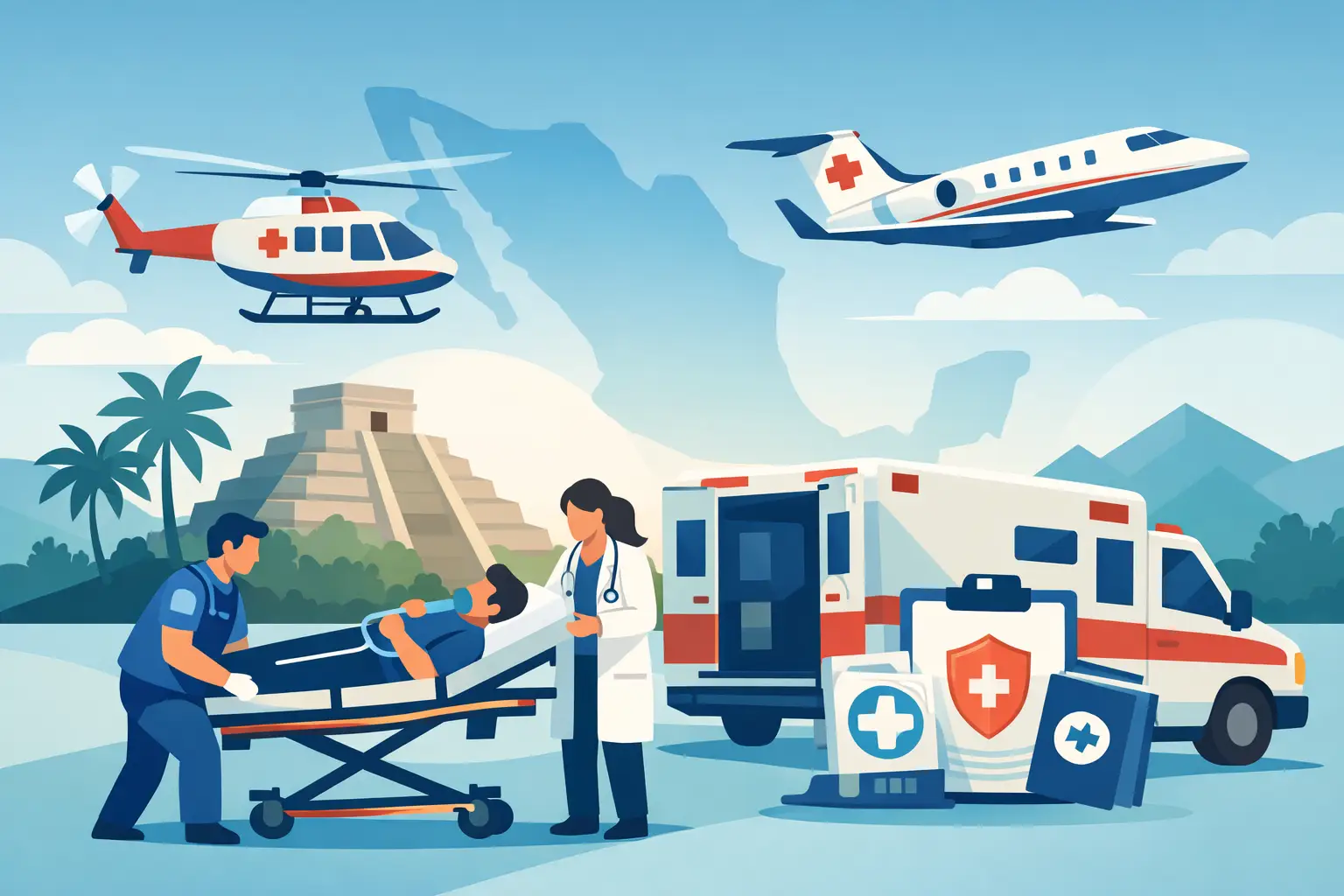
A serious accident on a remote Baja highway, a cardiac event far from home, or a complication that requires specialized treatment can change a Mexico trip quickly. Mexico medical evacuation coverage is designed for the moment when local care is not enough for your condition and getting to an appropriate hospital in the U.S. or Canada becomes medically necessary.
For travelers, RV owners, retirees, and families who spend time south of the border, evacuation protection is not simply a travel convenience. It can be the difference between a coordinated transfer and a costly, difficult process during a medical emergency. The right coverage should provide more than a promise of transportation. It should include medical coordination, clear eligibility rules, and assistance when decisions must be made quickly.
What Mexico Medical Evacuation Coverage Can Do
Medical evacuation coverage can arrange and pay for medically necessary transportation to an appropriate facility, often in the United States or Canada, when the treating medical team and assistance provider determine that local treatment cannot adequately meet the patient’s needs. Depending on the policy and circumstances, transport may involve a ground ambulance, commercial flight with a medical escort, or an air ambulance.
The key phrase is medically necessary. Evacuation coverage is generally not intended to provide a ride home because a traveler would prefer treatment near family or feels more comfortable with a U.S. doctor. A qualified medical professional must usually determine that the available local facility cannot provide the level of care required, or that transfer is necessary to protect the patient’s health.
That distinction matters. Major Mexican cities have excellent private hospitals and highly trained physicians. In many cases, the best and safest option is treatment where you are. The need for evacuation is more likely to arise when an injury or illness occurs in a rural area, on an offshore boating trip, along a remote driving route, or where advanced trauma, cardiac, neurological, or specialty care is unavailable.
Why Travelers Should Not Rely on Auto Coverage Alone
Mexican tourist auto insurance is essential for drivers because Mexico requires liability coverage from an authorized Mexican insurer. It can also provide valuable protection for covered vehicle accidents, including medical payments features when selected. But an auto policy and a medical evacuation plan serve different purposes.
Auto insurance responds to losses associated with your vehicle and covered accidents. Medical evacuation coverage is focused on transportation and assistance after a qualifying medical emergency, whether the illness or injury resulted from a traffic accident, a fall at your rental home, a boating incident, or a sudden medical condition.
This is especially relevant for travelers who assume their U.S. health plan will handle everything. Some domestic health plans offer limited international benefits, while others exclude non-emergency care outside the United States or pay only after substantial out-of-pocket expense. Even a plan that pays hospital bills may not cover an expensive air ambulance transfer. Before leaving, review your health plan’s international emergency provisions rather than relying on assumptions.
Evacuation Is Not the Same as Medical Treatment
Medical evacuation coverage generally addresses the transportation and coordination side of a serious event. It does not replace international medical insurance, which may help pay for doctor visits, hospital admissions, surgery, prescriptions, and other treatment expenses.
For some travelers, combining international medical coverage with evacuation protection makes sense. This can be particularly valuable for snowbirds, people with ongoing health concerns, families traveling with children, and travelers spending weeks or months in Mexico. The right arrangement depends on your existing health coverage, destination, trip length, and comfort with potential out-of-pocket costs.
The Situations Where Evacuation Protection Matters Most
Risk is not limited to high-adventure travel. A routine drive between towns can become an emergency after a collision. A quiet stay at a beach condo can be interrupted by appendicitis, dehydration, an infection, or a heart problem. Age, medical history, and the remoteness of your destination all affect the decision.
Mexico medical evacuation coverage deserves special consideration if your plans include long stretches of driving, remote beach communities, mountain regions, isolated RV parks, or areas where the nearest advanced hospital is hours away. Motorcycle riders and overland travelers may face a higher exposure to injury, while boat owners and anglers should consider how quickly emergency services can reach them offshore or from a marina.
It also matters for travelers who want the option to return to the U.S. or Canada when medically appropriate. A local hospital may be capable of stabilizing a patient but unable to provide the specialized follow-up care needed for a complex brain injury, severe burn, spinal trauma, or critical cardiac condition. In those cases, the assistance provider’s medical team can evaluate the situation and coordinate the transfer.
What to Look for Before You Purchase
Evacuation plans vary significantly, so the policy certificate matters more than a broad description of benefits. Review where coverage applies, the maximum benefit amount, the term of coverage, and the destination options available after a qualifying event. If you are traveling with a spouse or family, confirm whether each person is included and whether age restrictions apply.
Pay close attention to pre-existing condition language. Some policies may exclude conditions that existed before coverage began, while others may have limited exceptions for sudden, acute events. A traveler managing diabetes, heart disease, respiratory issues, or a recent surgery should ask direct questions before purchasing rather than discovering an exclusion during an emergency.
Also review how the plan handles a destination hospital. Some plans transport a patient to the nearest appropriate facility, while others may provide transport to a hospital in the U.S. or Canada once medical necessity is established. The closest appropriate hospital is not always the hospital closest to your home. Safety and available care come first.
Finally, understand who makes the evacuation decision. A reputable assistance program uses medical professionals to speak with the treating facility, assess the patient’s condition, and determine whether transfer is appropriate. That medical coordination is a central part of the value. Arranging an air ambulance without experienced oversight can create safety issues and costs that far exceed what most families expect.
What to Do During a Medical Emergency in Mexico
Get emergency medical care first. If someone is seriously ill or injured, call local emergency services or go to the nearest appropriate hospital. Do not delay treatment while trying to confirm every insurance detail.
Once the patient is stable enough, contact the evacuation assistance number shown on your policy documents. Have the patient’s name, policy number, location, treating physician or hospital contact, and a brief description of the medical issue ready. The assistance team can begin gathering medical information and discussing options with the local provider.
Do not arrange private transportation, a charter flight, or an air ambulance on your own unless the assistance provider specifically directs you to do so. Unapproved transportation may not be covered, and a patient who appears stable can deteriorate during transfer without the right equipment or clinical support.
If possible, ask a traveling companion or family member to handle communication and documentation. The patient may not be able to manage calls, forms, payment questions, and hospital updates. Keep copies of medical records, receipts, admission paperwork, and contact information for everyone involved.
Prepare Before You Cross the Border
The best time to evaluate evacuation protection is before departure. Save your policy documents and emergency contact number in your phone, but also carry a printed copy in your vehicle, RV, or travel folder. Cell service and battery power are not guaranteed in remote areas.
Share your itinerary with someone at home, especially if you are taking back roads, riding motorcycles, traveling by boat, or staying away from major resorts. Carry a current medication list, allergy information, and key medical history. For a major medical event, those details can help physicians make decisions quickly.
Lewis and Lewis has helped U.S. travelers address Mexico insurance needs for decades, including medical evacuation options for people who want stronger protection beyond their vehicle policy. The goal is straightforward: arrange coverage before the trip, so you are not trying to solve a financial and medical logistics problem from a hospital room.
A Practical Layer of Protection for Mexico Travel
No insurance can prevent an accident or illness. What it can do is give you a process, professional assistance, and a defined benefit when circumstances become serious. That is particularly valuable in a foreign country, where hospital capabilities, payment practices, language barriers, and transportation logistics may be unfamiliar.
Before your next drive, ride, RV trip, or extended stay in Mexico, consider how you would get appropriate care if the unexpected happened far from home. A clear evacuation plan lets you focus on the trip ahead while knowing that, if a true medical emergency requires transfer, you have a path to help.