

A disabled vehicle on a Mexican highway creates two immediate problems: getting safely off the road and paying to get moving again. Are Mexican roadside repairs covered by your insurance? Sometimes, but the answer depends on what caused the problem, the coverage you purchased, and whether you are asking about roadside assistance or damage from an accident.
That distinction matters. A Mexican auto policy can be legally valid and provide strong liability protection, yet still not pay for a worn-out alternator, a failed water pump, or a replacement tire. On the other hand, a policy with physical damage coverage may help pay to repair your vehicle after a covered collision or other covered loss, subject to its deductible and terms.
Are Mexican Roadside Repairs Covered? Start With the Cause
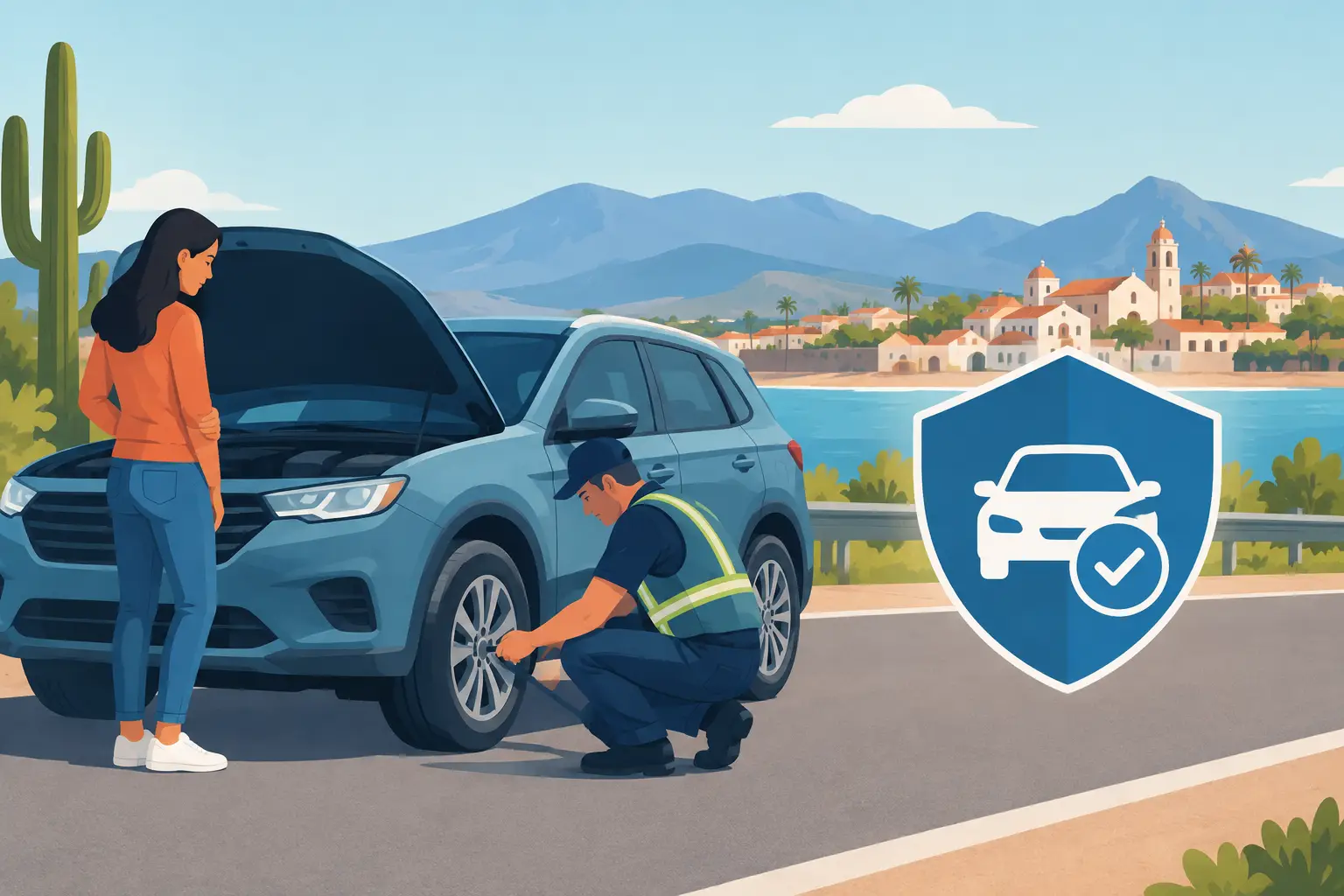
Roadside assistance and vehicle repair coverage are related, but they are not the same benefit. Roadside assistance is designed to help when your vehicle cannot continue safely. Depending on the policy and available service, it may include arranging or paying for help such as towing, a jump-start, lockout service, fuel delivery, or changing a flat tire.
The service may get your vehicle to a repair facility, but it does not automatically mean the policy pays the mechanic’s bill. If your truck overheats because of ordinary mechanical failure, for example, roadside assistance may help with the tow while the cost of diagnosing and repairing the engine remains your responsibility.
Physical damage coverage addresses a different situation. If your vehicle is damaged in a covered accident, the repair may be eligible under collision or other physical damage coverage. The policy deductible, the vehicle’s insured value, the adjuster’s inspection, and the cause of loss all affect what is paid.
Mechanical Breakdown Is Usually Not an Insurance Claim
Auto insurance is built to protect against sudden, accidental losses, not normal ownership costs. That means roadside repair coverage generally does not extend to maintenance, wear and tear, defective parts, or a mechanical issue that develops without an accident.
Common examples include a dead battery at the end of its life, brake wear, tire replacement, transmission failure, engine trouble, or repairs caused by poor maintenance. Even when a roadside service provider helps you reach a shop, you should expect to pay the shop directly for these repairs unless a separate warranty or service contract applies.
A flat tire is a useful example. Assistance may be available to install your usable spare or tow the vehicle if no safe spare is available. Buying a new tire, repairing a damaged wheel, or fixing the underlying suspension issue is a separate expense unless the damage resulted from a covered accident or covered event.
When Damage Repairs May Be Covered
When another vehicle hits you, you strike an object, or your vehicle is damaged in a covered loss, the situation changes. If you selected physical damage coverage on your Mexican auto insurance policy, the policy may help pay for repairs to your insured vehicle after the claim is reviewed.
Liability-only coverage is different. Mexican liability insurance is essential because Mexico requires locally valid liability coverage, but liability coverage generally pays for injury or property damage you cause to others. It does not pay to repair your own vehicle after an at-fault accident.
For protection for your own vehicle, look at the physical damage options available when you quote. Be clear about the vehicle’s actual insured value and review the deductible before you travel. A lower premium can be attractive, but the savings may be small compared with the expense of repairing a late-model SUV, truck, motorcycle, RV, or tow vehicle after a serious accident.
Coverage can also depend on the facts of the loss. An accident-related tow may be part of handling a covered claim, while a tow for an unrelated engine failure may fall under roadside assistance limits, if roadside assistance is included. Theft, vandalism, weather damage, and other losses must be evaluated under the specific policy terms rather than assumed to be covered.
What to Do When You Break Down in Mexico
Your first priority is safety. Pull as far from traffic as conditions allow, use hazard lights, and avoid standing in an active travel lane. On narrow roads, mountain routes, and remote areas of Baja or mainland Mexico, a simple mechanical problem can become more serious after dark or in extreme heat.
Then take these practical steps:
- Check your policy documents for the roadside assistance or claims phone number and call before authorizing a costly tow whenever possible.
- Explain whether the vehicle was involved in an accident, whether anyone is injured, and your exact location, including nearby mile markers, towns, landmarks, or GPS coordinates.
- Take clear photos of the vehicle, the damage, the road conditions, and any other vehicles involved. Keep receipts for towing, storage, and emergency expenses.
- Do not leave the scene of an accident without following the insurer’s claim instructions. A claims representative or adjuster may need to document the loss before repairs begin.
If the breakdown is purely mechanical, ask the roadside provider where the vehicle will be taken and whether you are responsible for mileage beyond a service limit. Confirm the repair shop’s estimate before approving work. For larger repairs, ask for the estimate in writing and keep copies of invoices and parts receipts.
Avoid Unauthorized Repairs After an Accident
After a covered accident, repairs made before the claim is reported or inspected can create delays. The insurer needs to determine the cause of damage, verify coverage, and assess the reasonable cost of repairs. Emergency measures to prevent further damage may be necessary, but major repairs should wait for claims direction when circumstances allow.
This is especially relevant for travelers who want to return to the United States quickly. Some Mexican auto policies offer the option to repair an eligible vehicle in the United States or Canada after a covered loss, subject to claim approval and policy conditions. Lewis and Lewis offers Mexican tourist auto insurance with U.S. repair options that do not impose an hourly labor-rate limit, which can be valuable when a qualified repair facility near home is the better choice.
Roadside Needs Differ by Vehicle Type
A compact car that needs a jump-start and a motorhome that needs a heavy-duty tow are not the same roadside event. Travelers towing trailers, driving large RVs, operating bus conversions, or riding motorcycles should confirm that their policy and assistance arrangements fit the vehicle they are taking into Mexico.
The practical issue is not only whether assistance exists, but whether appropriate equipment can reach you. Remote destinations, unpaved roads, oversized vehicles, and heavy trailers can affect response time, towing capability, and out-of-pocket cost. If you travel far beyond major cities, carry basic emergency supplies, enough water, a charged phone, and a copy of your policy information outside the vehicle as well as inside it.
Choose Coverage Before You Cross the Border
The best time to sort out roadside repair questions is before a problem occurs. When requesting a Mexican auto insurance quote, decide whether you need only the legally required liability protection or whether the value of your vehicle calls for physical damage coverage as well. Review the roadside assistance terms, deductibles, policy dates, and claims contact information before departure.
A one-day policy may make sense for a short border trip, while frequent visitors, snowbirds, and regular Baja travelers may find an annual policy more practical. Either way, carry your policy documents and understand what roadside help can do versus what insurance will pay to repair.
Before your next Mexico trip, choose coverage based on the vehicle and the trip you are actually taking. A quick review at home is far easier than trying to interpret coverage from the shoulder of an unfamiliar road.