

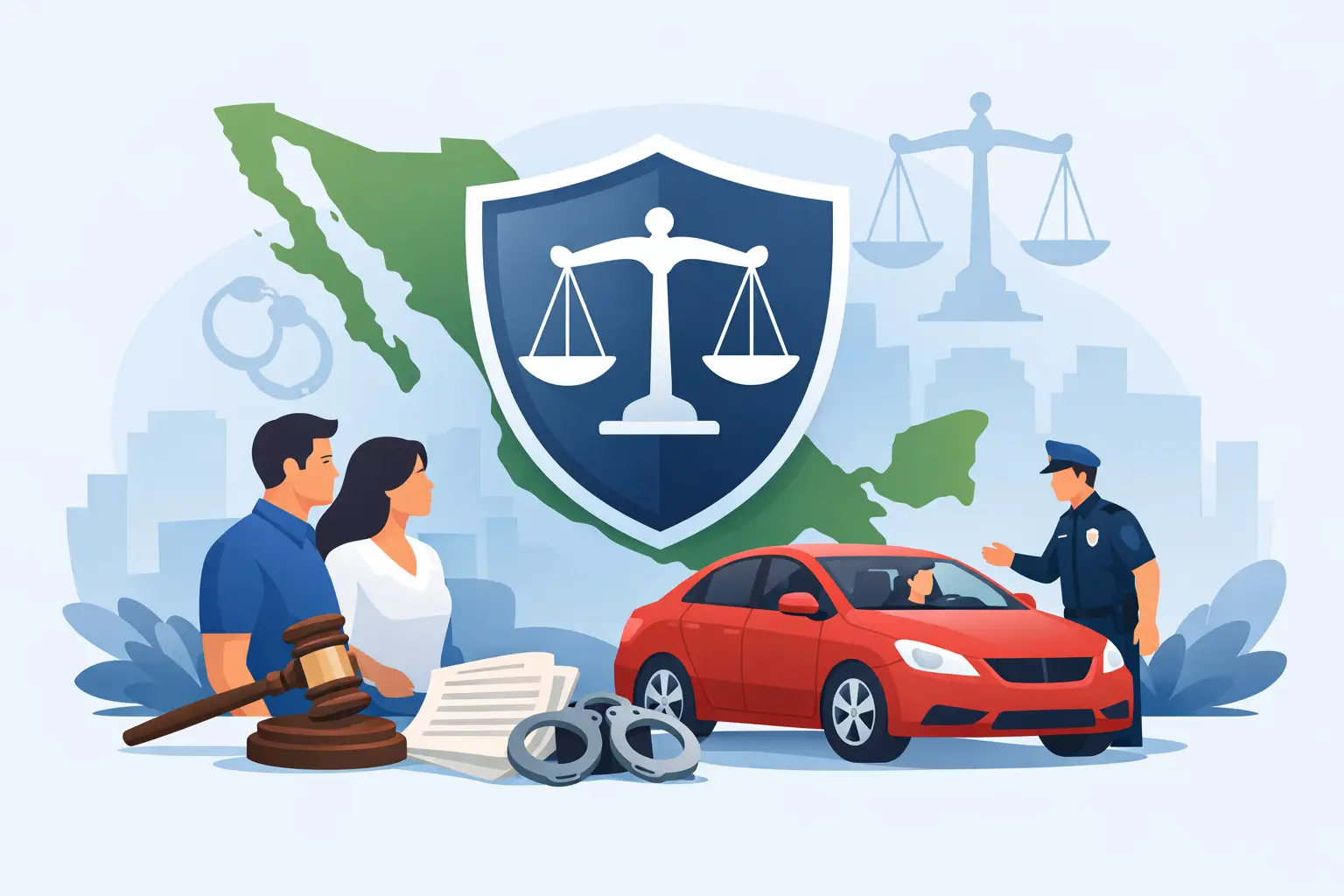
A traffic accident in Mexico can become more than a repair bill. When someone is injured or property damage is significant, drivers may need to remain available to authorities while the facts are reviewed. Mexico legal defense coverage is designed for that moment: it gives you access to legal support under your Mexican auto policy, rather than leaving you to locate and pay for counsel on your own.
For US drivers, this protection deserves as much attention as liability coverage. A familiar US auto policy generally does not satisfy Mexico’s financial-responsibility requirements, and it may not provide the local legal representation needed after an accident. Before crossing the border, make sure your Mexican policy includes meaningful legal-defense limits and understand how to use the coverage.
Why Legal Defense Matters After a Mexico Accident
Mexico’s legal system and accident procedures are different from those in the United States. After a serious collision, police, insurers, injured parties, and public officials may all be involved. Liability can be investigated before vehicles are released or drivers are allowed to continue their trip.
That does not mean every accident leads to detention or a lengthy legal matter. Minor incidents with no injuries may be resolved through the insurers and local authorities. But the stakes change quickly when another person is hurt, a pedestrian is involved, or authorities believe a crime may have occurred. In those situations, having a Mexican insurer arrange qualified legal assistance can make a difficult situation far more manageable.
Legal defense is not a substitute for driving carefully, carrying proper documents, or following instructions from police. It is a layer of financial and practical protection for an event you cannot fully plan for.
What Mexico Legal Defense Coverage Can Pay For
The exact benefits depend on the insurer and policy terms, so travelers should always review their declarations and policy wording. Generally, Mexico legal defense coverage helps with the costs of legal representation and related defense expenses arising from a covered auto accident.
A policy may provide an attorney to assist with the legal process, communicate with officials, and represent the insured driver’s interests. Depending on the circumstances and policy provisions, legal-defense benefits can also address certain court-related expenses and required bonds. These benefits are subject to the policy limit, eligibility requirements, and the insurer’s direction.
At Lewis and Lewis, Mexican tourist auto policies underwritten by Qualitas can include up to $100,000 in legal-defense coverage. That is a meaningful figure, but it should be considered alongside the policy’s liability limit, deductible structure, vehicle use, and trip plans. A policy built only around the lowest available price may leave too little room for a serious claim.
Legal Defense and Liability Are Different Protections
Liability coverage pays for bodily injury or property damage you are legally responsible for causing to others, up to the selected limit. Legal defense coverage helps address the cost of defending you in connection with a covered accident. One responds to damages owed to others; the other responds to the legal process surrounding the event.
Both matter. A driver may carry a strong liability limit but have limited funds available for legal representation. Conversely, legal defense cannot make up for inadequate liability coverage if a serious injury claim exceeds the amount available to pay damages.
For many travelers, a combined single-limit liability policy of $500,000 provides a stronger starting point than basic liability. The right amount depends on your assets, vehicle, destination, driving frequency, and comfort with risk. Families, RV owners, frequent Baja travelers, and drivers who spend extended periods in Mexico often have good reason to choose broader protection.
When Legal Defense May Be Most Valuable
Legal-defense coverage is especially relevant when an accident involves bodily injury. It can also become important when there is a dispute over fault, substantial property damage, multiple vehicles, or an allegation that the driver violated a local law.
Consider an RV traveler towing a vehicle through a busy border city. A collision that appears straightforward to the driver may involve commercial traffic, unfamiliar road markings, or several witnesses. Or consider a motorcycle rider on a rural route where communication is difficult and emergency response takes time. In each case, a local claims and legal response can be more useful than trying to interpret events from a distance.
Coverage is also valuable for travelers who do not speak Spanish fluently. Language alone does not determine fault or legal responsibility, but it can make an already stressful situation harder to handle. The insurer’s claims process and assigned representatives are there to help establish the next steps under the policy.
What Legal Defense Coverage Does Not Solve
No insurance coverage removes every obligation after an accident. A driver still needs to cooperate with authorities, avoid admitting fault, and remain at the scene unless directed otherwise. Leaving the scene of an accident can create serious problems, particularly where injury or major damage is involved.
Legal-defense coverage also has exclusions and conditions. It may not apply if the vehicle was being used outside the policy’s permitted use, the driver was impaired, the policy had expired, or the insured failed to meet a requirement of the policy. Coverage can also be affected by unlicensed driving, intentional acts, racing, or using a personal vehicle for an undisclosed commercial purpose.
This is why an accurate quote matters. Insure the correct vehicle type and value, identify whether you are towing, and select dates that cover your entire time in Mexico. Motorhomes, motorcycles, street-legal ATVs, and bus conversions each require coverage written for the vehicle actually being driven.
What to Do After an Accident in Mexico
Your actions at the scene can protect both your safety and your claim. First, move to a safe location if possible without leaving the scene, and call emergency services if anyone may be injured. Then contact your Mexican insurance company using the claims number shown on your policy documents.
Do not rely on a US insurer to manage a Mexico accident. Report the claim to the Mexican insurer promptly and wait for the adjuster or claims representative’s instructions. Keep your policy, driver’s license, vehicle registration, and any required travel documents available.
Avoid signing documents you do not understand or making cash arrangements before speaking with the insurer’s representative. Take photos of the vehicles, road conditions, license plates, and visible damage if it is safe to do so. Get names and contact details for witnesses when possible, but do not argue with the other driver or attempt to decide fault at the roadside.
If police or officials ask questions, stay calm and cooperative. Your insurer’s legal-defense process is most effective when it is involved early, while the facts are being documented.
Choosing the Right Policy Before You Cross
The best time to evaluate legal protection is before a trip, not after a collision. Start by confirming that the policy is issued by an authorized Mexican insurer and that it includes both liability and legal-defense benefits. Then compare limits, not just premiums.
A one-day policy may be appropriate for a short border crossing. Annual coverage can make more sense for frequent visitors, retirees, snowbirds, and families who make several trips each year. If you drive multiple vehicles or regularly tow a trailer, ask how each vehicle and unit should be listed and covered.
Also consider where repairs would be completed after a covered loss. For many US-based travelers, US repair access and medical evacuation options are practical additions to a well-planned Mexico insurance package. They do not replace legal defense, but together they address different parts of a cross-border emergency.
Keep a printed copy of your policy in the vehicle, save the claims number in your phone, and make sure every listed driver knows where to find both. A well-chosen Mexican auto policy cannot prevent an accident, but it can give you a clear path to help when the trip takes an unexpected turn.