

A collision south of the border is not the time to find out whether your insurance is prepared to respond in Mexico. Mexican authorities generally require a Mexican auto insurance policy, and the claims process works differently from a typical accident back home. The decisions you make in the first hour can affect fault determination, repairs, deductibles, and your ability to continue your trip.
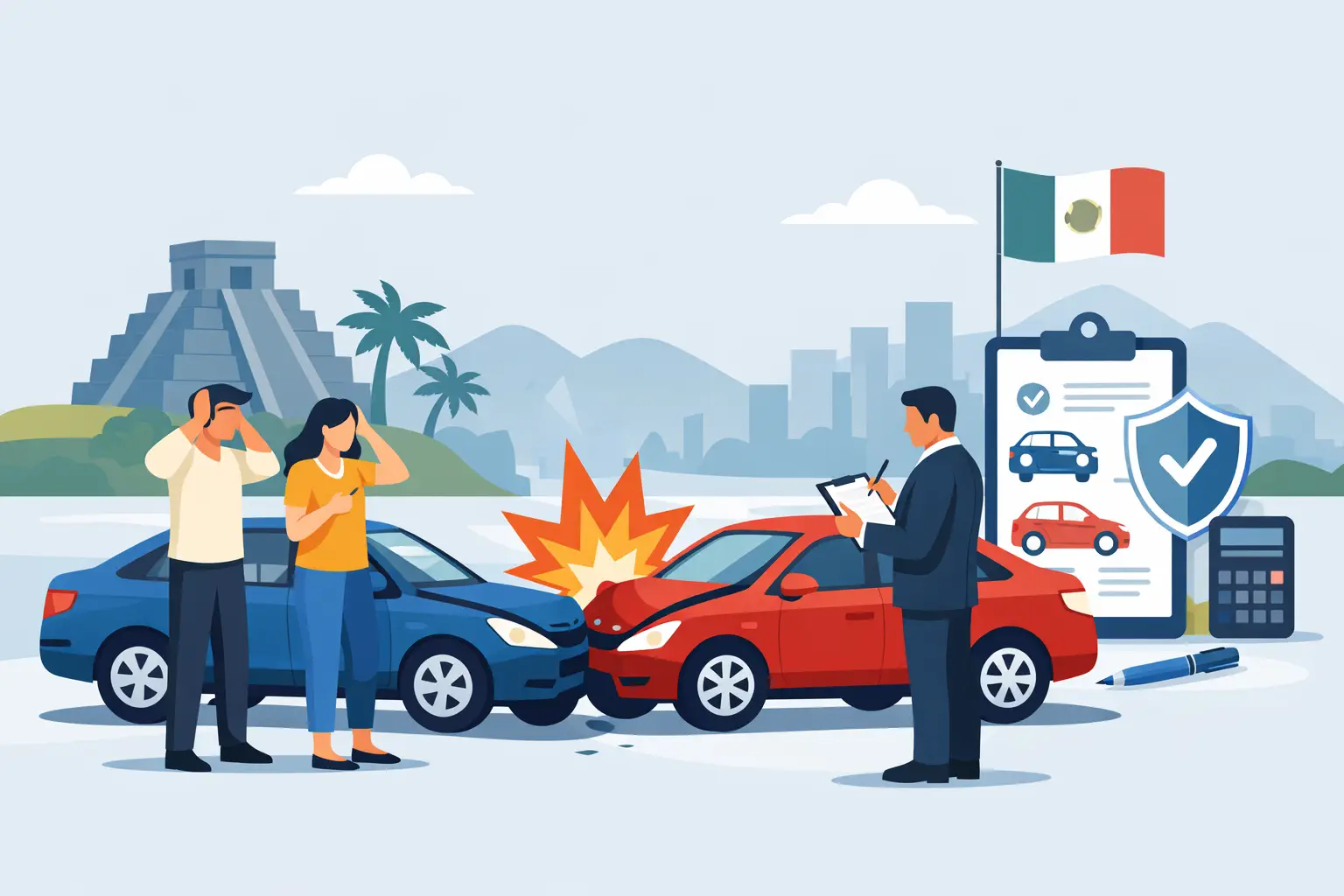
Mexico auto insurance claims are usually handled at the scene by a local adjuster. Your job is not to negotiate fault on the roadside. It is to protect everyone involved, contact the insurer promptly, preserve the facts, and follow the adjuster’s instructions.
What to Do Immediately After an Accident in Mexico
Start with safety. Pull out of traffic only if it is safe to do so and if moving the vehicles will not interfere with authorities or the insurer’s instructions. Turn on hazard lights, check for injuries, and call emergency services when anyone needs medical attention. In Mexico, 911 is the general emergency number.
Next, call the claims number shown on your Mexican auto insurance policy. Have your policy number, location, phone number, vehicle description, and a short description of what happened ready. If you cannot identify your exact location, use a nearby mile marker, landmark, cross street, town, or a location pin from your phone.
An adjuster may be dispatched to the scene. This is a central part of many Mexican auto insurance claims. The adjuster can inspect the vehicles, gather statements, coordinate with authorities, explain the next steps, and help determine whether towing or repairs are needed. If a serious accident involves injuries, substantial damage, or a disagreement about responsibility, legal procedures may also be involved.
Do not leave the scene before you have spoken with the insurer or received clear direction, unless emergency personnel require it. Leaving too soon can make it harder to document the loss and may complicate your claim.
Document the Accident Carefully
While waiting for the adjuster, take clear photos and short videos if it is safe to do so. Capture vehicle positions, damage to every vehicle, license plates, road conditions, traffic signs, skid marks, nearby landmarks, and the general scene. Photograph the other driver’s Mexican insurance information, driver’s license, registration, and contact details when available.
Write down the time, location, weather, direction of travel, and what you observed before the impact. Details fade quickly, especially after a stressful event. If there are witnesses, ask for their names and phone numbers.
Keep all paperwork you receive. That may include a police report, adjuster report, claim number, towing receipt, repair estimate, medical documentation, or settlement-related forms. Take a photo of every document before handing over originals.
Avoid signing a statement you do not understand. Do not admit fault, promise to pay someone directly, or agree to a cash settlement at the roadside without speaking to your insurer. Even a minor-looking impact can produce an injury allegation or hidden vehicle damage later.
Have these items ready
Your claims call will go more smoothly if you can provide your Mexican insurance policy, driver’s license, vehicle registration, passport or travel documents, and any lender or lease information associated with the vehicle. If you are towing a trailer, driving a motorhome, or riding a motorcycle, make sure the policy documents match the vehicle and equipment involved in the loss.
Why Legal Defense Coverage Matters
An accident in Mexico can become more than a vehicle repair issue. In a serious collision, authorities may need to investigate responsibility before vehicles are released or before you can leave the area. That is why legal defense coverage deserves the same attention as liability limits.
Liability coverage helps address damage or injuries you are legally responsible for causing to others, subject to policy terms and limits. Legal defense coverage can help provide counsel and support through covered legal proceedings. These are separate protections, and both matter when driving in a different legal system.
For US travelers, it is wise to choose meaningful limits rather than buying the least expensive policy available simply to meet a requirement. A policy with up to $500,000 combined single-limit liability and up to $100,000 in legal defense can offer a much stronger financial cushion than a bare-minimum approach. The right amount still depends on your vehicle, where you drive, how often you travel, and the assets you need to protect.
How Repairs and Towing May Work
After the adjuster evaluates the vehicle, the insurer may authorize repairs at a facility in Mexico, towing to a designated location, or another approved repair arrangement. The available option depends on the damage, your location, the vehicle’s condition, and the terms of your policy.
Some travelers prefer to have a repairable vehicle brought back to the United States. That can be especially valuable for late-model vehicles, specialty RVs, custom trucks, and vehicles that need a US-based shop familiar with their parts or equipment. US repair options may be available under qualifying coverage, but authorization should come from the insurer before repairs begin. Do not assume you can arrange repairs on your own and submit the bill later.
Labor-rate restrictions can make a major difference in a cross-border repair claim. A policy that allows US repairs without an hourly labor-rate limit can help prevent a gap between the shop’s actual bill and the amount allowed by the claim. Even then, deductibles, coverage limits, prior damage, wear and tear, and excluded items can affect the final payment.
If your vehicle cannot be driven, ask the adjuster where it is being towed, who will have access to it, and what personal property should be removed. Keep the towing information with your claim number.
Theft, Vandalism, and Damage When You Are Not Present
Not every claim begins with a collision. If your vehicle is stolen or vandalized, report it to local authorities and your insurer immediately. Ask for the report number and preserve all keys, registration documents, photos, and proof of ownership. Do not delay reporting because you are hoping the vehicle will turn up.
For vandalism or damage discovered in a parking area, photograph the scene before moving the vehicle if possible. Nearby businesses, hotels, campgrounds, or security personnel may have information that helps establish when and where the damage occurred.
Theft claims often require more documentation than collision claims. Lenders may also have an interest in the settlement if the vehicle is financed. Your insurer can explain the documents required for the particular loss.
Common Mistakes That Slow Mexico Auto Insurance Claims
The most common problem is waiting to report the accident until after returning to the United States. A delayed report can mean the adjuster never sees the scene, the vehicles have been moved, and key facts are harder to verify. Call while you are still at the location whenever possible.
Another mistake is relying on a US or Canadian auto policy alone. Those policies may not satisfy Mexican legal requirements or provide the local claims response needed after an accident. Mexican coverage should be in force before crossing the border, with dates that cover the full trip.
Travelers also run into trouble when the policy does not reflect the vehicle they are actually driving. A motorhome, bus conversion, motorcycle, street-legal ATV, towed trailer, or Mexican-registered vehicle may have different insurance needs. Review the declarations before departure, particularly for annual policies and vehicles used for extended stays.
Finally, do not treat the deductible as an afterthought. Ask how it applies to collision, theft, glass, or other covered losses. The lowest premium is not always the superior value if it leaves you carrying an uncomfortable out-of-pocket cost after a major incident.
Prepare Before You Cross the Border
A few minutes of preparation can reduce stress if something goes wrong. Save the claims number in your phone, keep a printed copy of the policy in the vehicle, and share the policy details with every permitted driver. If you travel with an RV or tow vehicle, keep photos of the rig and its contents before departure.
Lewis and Lewis has specialized in Mexican insurance for more than four decades, with coverage designed for US drivers who need legally valid protection in Mexico and practical claims support when plans change. Before you leave, confirm your liability limit, legal defense amount, physical damage deductible, roadside or towing provisions, and whether US repair access is included in the coverage you select.
The best claims strategy is simple: carry the right Mexican policy, call promptly, let the adjuster guide the process, and keep a careful record of every conversation and document. That preparation gives you more control when a road trip takes an unexpected turn.