

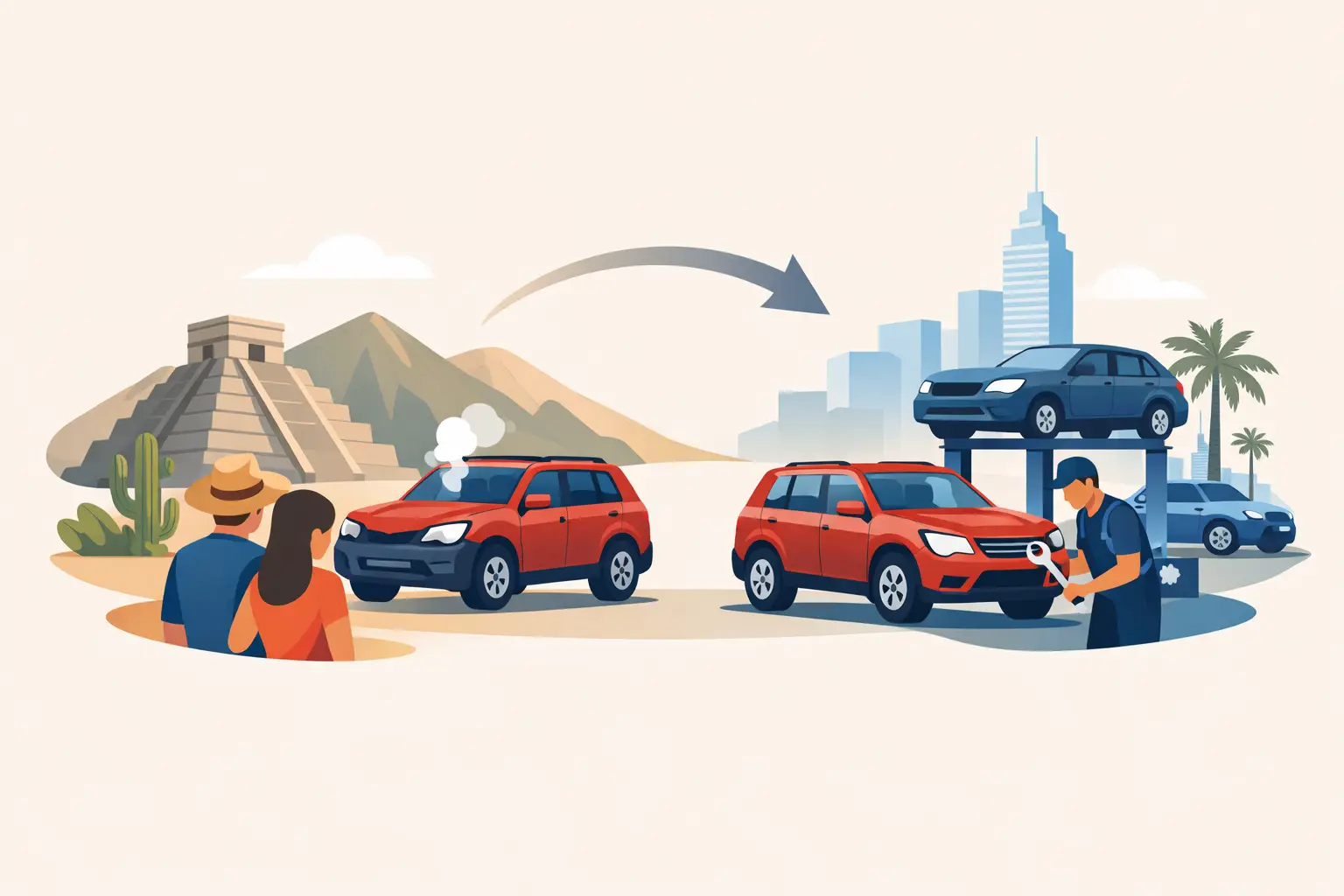
A collision in Mexico can leave a U.S. driver with two immediate concerns: handling the local legal and claims process, then getting the vehicle repaired properly. Mexico auto insurance US repairs can make that second part far less disruptive, especially for families, RV owners, snowbirds, and frequent Baja travelers who need to return home before a vehicle can be fixed.
The key is understanding what a U.S. repair option actually means before an accident happens. It is not a reason to skip the Mexican claims process, and it is not an automatic promise that every repair will be paid exactly as a U.S. body shop bills it. It is a valuable policy feature that may allow a qualifying covered claim to be repaired in the United States after the insurer has reviewed and authorized the loss.
Why Mexico Auto Insurance US Repairs Matter
Mexico requires insurance from an authorized Mexican insurer for drivers who enter the country. Your U.S. or Canadian auto policy may provide limited coverage in some situations, but it generally does not satisfy Mexico’s financial responsibility requirements. A Mexican policy also provides the local claims, liability, and legal-defense protection needed after an accident involving Mexican authorities, other drivers, or property damage.
A U.S. repair option addresses a separate practical problem. If your car, truck, motorcycle, motorhome, or tow vehicle is damaged during a trip, arranging repairs in Mexico may not fit your schedule. You may be traveling with children, trying to get an RV back home, or facing a return date for work. Having the option to repair in the United States can give you more control over where the work is completed once the claim is approved.
For a qualifying covered claim, this feature can also help you work with a repair facility closer to home and communicate directly with a shop you know. That can be particularly helpful for specialized vehicles, including diesel pickups, converted buses, classic vehicles, and motorhomes with custom equipment.
A U.S. Repair Option Starts With a Mexican Claim
The location of the repair does not change where the accident occurred or which insurer handles the loss. If you have an accident in Mexico, report it promptly using the claims instructions provided with your Mexican policy. The insurer’s adjuster must have an opportunity to document the damage, review the circumstances, and determine whether the loss is covered.
At the accident scene, protect everyone first. Contact emergency services when needed, avoid admitting fault, and keep the vehicle where it is unless authorities or safety conditions require otherwise. Take clear photos of the vehicles, license plates, road conditions, visible damage, and any relevant signs. Exchange information with the other party, but let the adjuster and authorities handle the formal determination of responsibility.
Do not authorize repairs or assume reimbursement before the claim is reviewed. Moving a damaged vehicle across the border without insurer guidance can complicate a claim, particularly if the adjuster has not inspected it or the vehicle is unsafe to drive.
Authorization Comes Before the Repair Estimate
Once the insurer has opened the claim, an adjuster or claims representative will evaluate the damage and explain the next steps. If U.S. repairs are available under your coverage, the insurer will generally need to approve the repair location and estimate before work begins.
This process protects both the policyholder and insurer. It confirms that the damage is related to the reported accident, identifies covered repairs, and establishes how the deductible will apply. It also prevents an avoidable dispute after a shop has already completed work at a price the insurer has not approved.
A policy with U.S. repair access and no hourly labor-rate limit can be a meaningful advantage. Labor rates can vary widely between Mexican repair facilities and U.S. shops, especially in high-cost metropolitan areas or for specialized RV and collision repair work. Still, covered repairs, parts decisions, deductibles, and authorization requirements remain subject to the policy terms and the approved claim.
What Can Affect Whether Repairs Are Approved in the U.S.
Every accident is different. The decision can depend on the coverage selected, the type and extent of damage, the vehicle’s condition, the claim documentation, and whether the insurer has approved the repair plan. A minor dent on a vehicle that can be safely driven may be handled differently than major suspension damage, a total loss, or an accident involving injuries and local authorities.
Physical damage coverage is central to this question. Liability coverage helps pay for covered injury or property damage you cause to others. It does not pay to repair your own vehicle. To seek payment for your own collision damage, theft, vandalism, or certain other covered losses, you need the appropriate physical damage protection on the Mexican policy.
The insured value you choose also matters. When requesting a quote, use a realistic total insured value for the vehicle and permanently attached equipment. Understating the value may create an unpleasant surprise if the vehicle is severely damaged or declared a total loss. RV owners should include permanently installed items that are part of the coach, while confirming how personal belongings and removable gear are treated.
Deductibles are another practical consideration. If the approved repair cost is less than or close to your deductible, filing a physical damage claim may not make financial sense. If the damage is substantial, U.S. repair access can be much more valuable than the deductible amount.
Plan for the Border Before You Need To Cross It
A damaged vehicle does not always need to be repaired immediately in Mexico, but it must be safe and legally able to travel. Before driving it north, ask the claims representative whether the vehicle may be moved, whether an inspection is still needed, and what documents should travel with the vehicle.
Border officials may have questions about a visibly damaged vehicle, particularly if it is being towed. Keep your Mexican policy, claim number, adjuster contact information, vehicle registration, and any repair authorization or tow paperwork readily available. If the vehicle cannot be safely driven, arrange towing through the claims process or with the insurer’s direction rather than making assumptions about cross-border towing.
For major damage, the best solution may be different. A vehicle may need to remain in Mexico for inspection, require local repairs before it can move, or be treated as a total loss under the policy. The value of an experienced Mexican-insurance agency is knowing that these are claims questions, not decisions to make from the roadside without guidance.
Choose Coverage for the Vehicle You Actually Drive
The cheapest Mexico policy can leave gaps at exactly the wrong time. Consider the cost and complexity of replacing or repairing your vehicle, where you will travel, how often you cross the border, and whether you would want the flexibility to repair in the United States.
A weekend beach trip in a late-model sedan may call for a different approach than a months-long RV trip through Baja or mainland Mexico. Frequent travelers may find annual coverage more convenient than buying separate short-term policies. Drivers with expensive trucks, motorcycles, trailers, or motorhomes should pay close attention to insured value, physical damage coverage, roadside needs, legal defense, and U.S. repair provisions.
Lewis and Lewis offers Mexican tourist auto insurance backed by Qualitas, Mexico’s largest vehicle insurer, with policies designed for U.S.-based drivers and a U.S. repair option without an hourly labor-rate limit. Before purchasing, review the declarations and policy terms so you know the limits, deductibles, vehicle eligibility, and claim steps that apply to your specific coverage.
Keep the Right Information in the Vehicle
A smooth claim usually begins with information that is easy to find. Carry your Mexican policy documents, your insurer’s claims phone number, current vehicle registration, driver’s license, and proof of your immigration status if applicable. Save the same documents on your phone, but do not rely only on a weak cellular signal after an accident.
It also helps to photograph the vehicle before a trip, including all sides, the odometer, and valuable permanently attached accessories. Those photos can help distinguish prior damage from new damage and make the inspection process clearer. If you tow a trailer or drive an RV, keep records for both the powered vehicle and the attached unit.
Before your next crossing, choose Mexican coverage that protects you in Mexico and gives you a realistic repair path once you are home. A few minutes spent confirming U.S. repair terms can spare you from making high-stakes decisions on the shoulder of an unfamiliar road.