


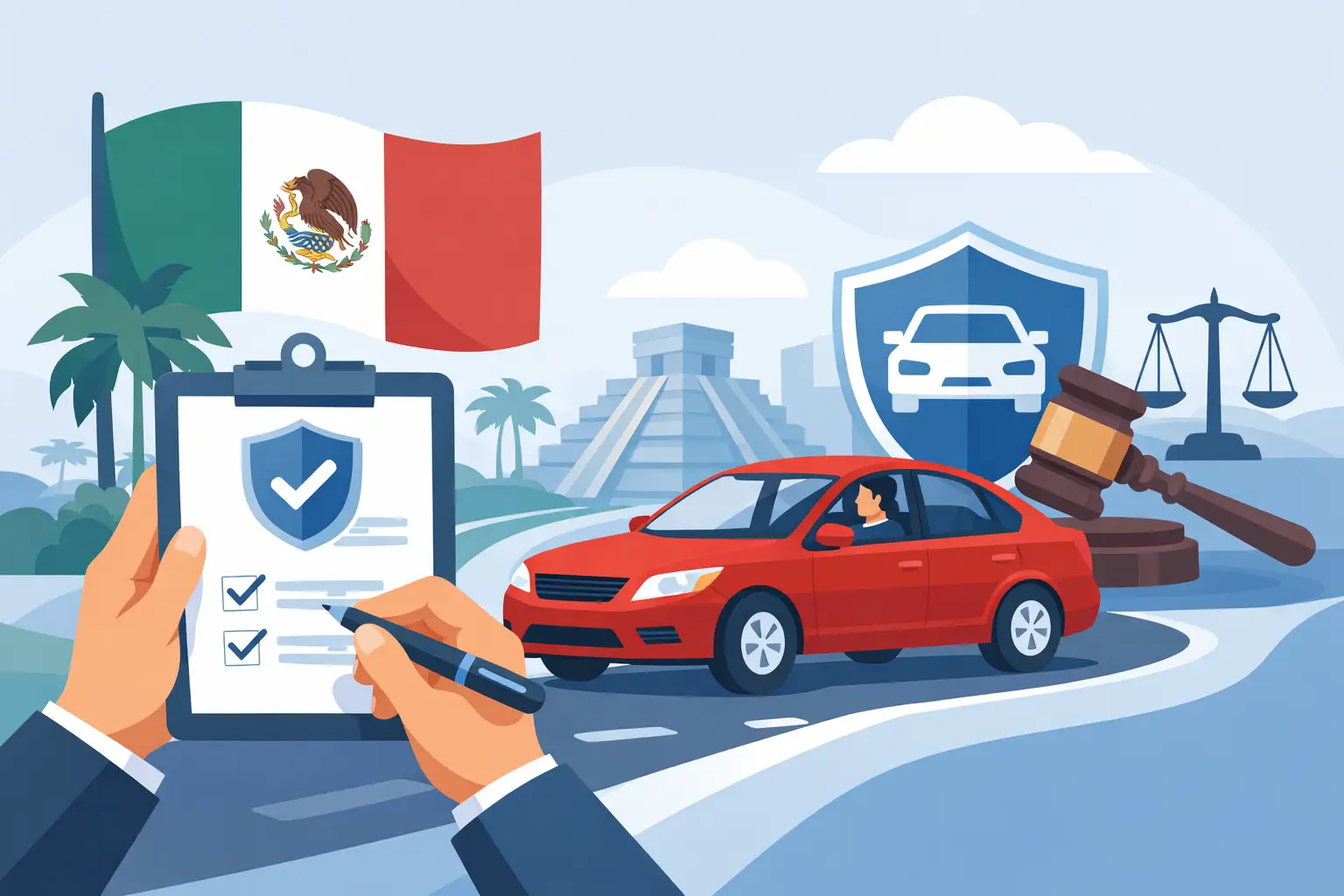
A few miles south of the border, the insurance card in your glove box may no longer provide the protection you expect. If you are asking, “Is Mexico liability legally required?” the practical answer is yes: drivers need valid Mexican third-party liability coverage when operating a vehicle in Mexico. A U.S. or Canadian auto policy generally does not meet this requirement, even if it offers limited coverage near the border.
That distinction matters most after an accident. Mexican authorities, other drivers, and claims representatives need proof of coverage issued for Mexico. Without it, a routine collision can become an expensive and stressful legal problem.
Is Mexico liability legally required on every trip?
Mexican liability insurance is required for vehicles traveling on federal roads, and liability requirements also apply under state and local laws. The required minimum limit can vary by location and circumstance, but the legal minimum is not the same as adequate protection.
Third-party liability pays for bodily injury or property damage you cause to others. It does not pay to repair your own truck, motorcycle, RV, or car. It also does not automatically provide the level of legal support a visiting driver may need after a serious accident.
For U.S. travelers, the safest approach is to purchase a Mexican tourist auto policy before crossing the border. A policy issued by a Mexican insurer gives you documentation that is recognized in Mexico and provides access to the claims and legal-defense process designed for accidents there.
There can be limited exceptions depending on where you drive and how your vehicle is used, but they are not a reason to rely on a U.S. policy. If you will drive beyond the immediate border area, travel on federal highways, visit Baja, tow a trailer, or stay for more than a brief crossing, valid Mexican coverage should be treated as essential.
Why the minimum required liability limit may not be enough
Legal minimums exist to establish financial responsibility. They are not a recommendation for the amount of risk a family, retiree, motorhome owner, or frequent Mexico traveler should carry.
A serious injury claim can involve medical bills, lost income, vehicle damage, and legal expenses. If damages exceed the liability limit on your policy, you may be personally responsible for the difference. That is why many experienced cross-border drivers choose higher limits rather than buying the least expensive policy that satisfies the requirement.
When comparing coverage, look at the combined single limit for bodily injury and property damage, not just the word “liability” on the quote. A higher combined limit can provide more flexibility when an accident involves both injuries and damaged property. Lewis and Lewis offers Mexican tourist auto insurance options with up to $500,000 in combined single-limit liability, providing a stronger margin of protection than a basic minimum-limit policy.
The right limit depends on your vehicle, your destination, how often you travel, and the assets you want to protect. A short Baja weekend in a modest vehicle and a season-long motorhome trip through mainland Mexico do not present the same exposure.
What happens if you have an accident without Mexican liability insurance?
No one plans to be in an accident, but Mexico handles accident scenes differently than many U.S. drivers expect. Authorities may require involved parties to remain at the scene while responsibility is evaluated. Depending on the circumstances, you could face vehicle impoundment, detention, financial demands, or difficulty continuing your trip until the matter is resolved.
Having Mexican liability insurance does not eliminate the consequences of an accident. It gives you a recognized insurer, a claims process, and policy-backed assistance when you need to respond. That support is especially valuable when you are dealing with local procedures in another country.
Legal-defense coverage deserves close attention. A policy with meaningful legal-defense limits can help pay for attorneys, bail bond expenses when applicable, and other covered legal costs arising from an accident. Policies are subject to their terms, conditions, and exclusions, but this is not an area where travelers should assume basic liability protection is enough.
For example, a policy may advertise an attractive price while providing low liability limits or limited legal expense protection. It may be legally valid, yet still leave a large financial gap after a serious loss. Compare the actual limits, not only the premium.
Mexican liability insurance is different from full coverage
Liability is the foundation because it protects other people from damage you cause and helps satisfy Mexico’s legal requirements. However, it is only one part of a well-rounded Mexican auto policy.
If you want protection for your own vehicle, consider physical damage and total theft coverage. These coverages can be particularly valuable for newer vehicles, trucks carrying equipment, motorcycles, and RVs. Deductibles, valuation methods, and covered perils vary, so review the policy details before buying.
Medical payments coverage can help with covered medical expenses for occupants of your vehicle. Roadside assistance, travel assistance, and U.S. or Canada medical evacuation can also matter when you are far from home. For many travelers, those benefits are not extras. They are part of making sure a vacation, fishing trip, or retirement drive does not turn into a logistical crisis.
If you drive a rented vehicle, borrow a friend’s vehicle, or need coverage tied to you rather than a particular car, driver’s-license liability coverage may be worth considering. This type of policy can address a different need than insuring your personally owned vehicle. Confirm exactly what vehicle uses and drivers are covered before you rely on it.
How to choose a policy before you cross
Start with the vehicle and the trip. Enter the correct vehicle type, value, travel dates, and Mexican destination when requesting a quote. A passenger car, lifted truck, motorhome, bus conversion, street-legal ATV, and motorcycle may have different underwriting requirements and coverage options.
Then compare more than the liability limit. Check the legal-defense amount, physical damage deductible, theft deductible, roadside and towing benefits, and where repairs can be completed. If U.S. repairs are important to you, ask whether the policy allows repair in the United States and whether labor rates are limited.
Also make sure every planned driver is eligible. Do not assume a policy follows the vehicle without restrictions. Age requirements, driver licensing, commercial use, delivery use, towing, off-road use, and vehicle registration can affect coverage. A vehicle registered in Mexico may require a different policy than a U.S.-registered vehicle visiting as a tourist.
For repeat travelers, an annual policy may offer better value and fewer last-minute decisions than purchasing separate short-term policies for every trip. For an occasional visitor, coverage can often be arranged from one day through the length of the trip. The better choice is the one that matches your actual travel pattern and gives you time to review the documents before departure.
Keep your policy information easy to reach
Once your policy is issued, carry your Mexican insurance documents in the vehicle and save a digital copy where you can access it without relying on cell service. Keep the claims reporting information with your registration and driver’s license. If an accident occurs, call the insurer’s claims number promptly and follow its instructions before agreeing to repairs or signing documents.
Do not leave the scene of an accident unless authorities direct you to do so. Take photos when it is safe, gather basic information, and avoid admitting fault. The goal is not to argue the case on the roadside. It is to protect your safety and allow the insurer and legal representatives to handle the process correctly.
Mexico liability insurance is a legal requirement, but buying it should be about more than checking a box at the border. Choose a policy with limits and legal support that make sense for the people, vehicle, and plans you are bringing into Mexico. Then you can spend more time enjoying the road and less time worrying about what happens if the unexpected finds you first.