


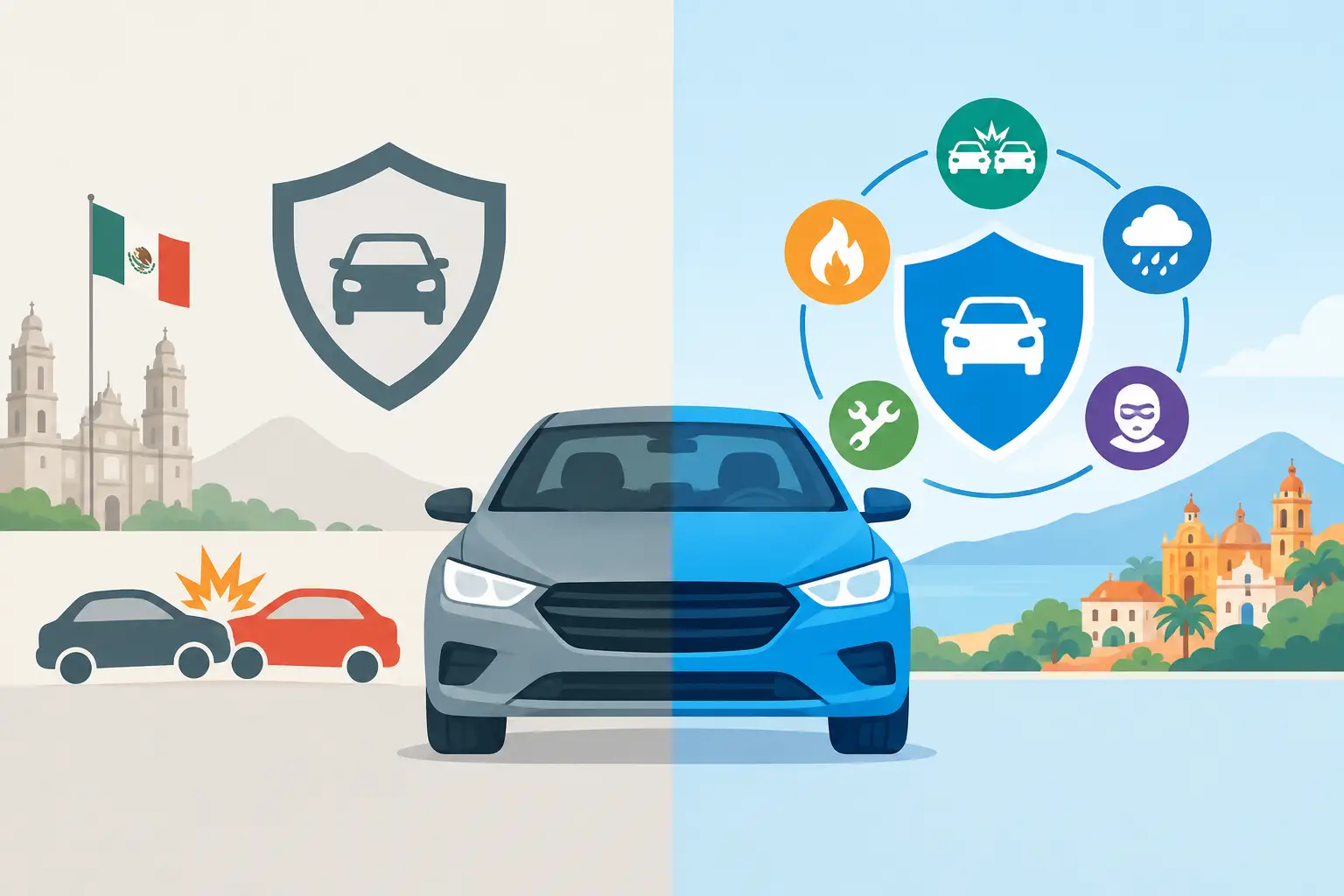
Your U.S. auto policy may protect you for a few miles beyond the border, or it may provide no meaningful protection at all. More importantly, Mexican authorities require insurance issued by a Mexican insurer. That makes the decision between Mexican liability versus full coverage more than a price question. It determines whether you are protected only when you harm someone else or whether your own vehicle, trip, and finances have protection after a covered loss.
For a quick day trip, the lower premium of liability-only coverage can look appealing. But a collision in Mexico can involve medical costs, property damage, legal procedures, towing, and a vehicle that may be difficult to repair or bring home. The right choice depends on what you drive, what it is worth, where you are traveling, and how much loss you can comfortably absorb.
Why Mexican Liability Coverage Is Required
Mexico requires drivers to carry liability insurance from a Mexican insurance company. Liability coverage pays for covered bodily injury or property damage you cause to others in an accident. It is the foundation of every Mexican tourist auto policy because it addresses your legal financial responsibility to third parties.
Basic liability is not the same as broad protection. If you hit another vehicle, damage a gate, or injure a pedestrian, liability coverage can respond up to the policy limit. It generally does not pay to repair your own vehicle, replace it after theft, or cover damage from a rollover.
Limits matter as much as the fact that you have a policy. A very low limit may satisfy a minimum requirement but leave you responsible for damages above that amount. Travelers driving farther into Mexico, traveling with family, or operating a larger vehicle should consider higher limits carefully. Policies available through Lewis and Lewis can offer up to $500,000 in combined single-limit liability, along with up to $100,000 for legal defense, subject to policy terms and conditions.
Mexican Liability Versus Full Coverage: The Core Difference
The plain-English distinction is straightforward. Liability coverage protects other people from damage you cause. Full coverage is a common consumer term for a broader package that also helps protect your own vehicle.
Unlike a standardized legal definition, “full coverage” can mean different things from one policy to another. When comparing quotes, look past the label and read the actual coverages, limits, deductibles, exclusions, and territorial terms. A strong Mexican tourist auto policy may combine liability with physical damage, total theft, legal assistance, medical expense benefits, roadside assistance, and other available protections.
What liability-only coverage can do
Liability-only coverage is often a reasonable fit when the vehicle has low market value, when a traveler can afford to replace or repair it without insurance, or when the trip is brief and close to the border. It can also make sense for drivers who need legally valid coverage for a borrowed or older vehicle and do not want to insure its physical value.
The trade-off is direct: damage to your vehicle remains your expense. If your truck is hit while parked, your motorcycle is stolen, or you slide into a ditch on a remote Baja road, liability-only insurance is not designed to pay for those losses.
What broader coverage may include
A full-coverage-style Mexican policy usually adds physical damage and total theft protection for the insured vehicle. Physical damage can help pay for covered collision, rollover, vandalism, weather-related damage, and other accidental losses, depending on the policy. Total theft coverage addresses the loss of the vehicle when it is stolen and not recovered, subject to the policy’s requirements.
These coverages normally have deductibles. A deductible is the amount you pay before the insurance payment applies to a covered loss. For example, choosing a lower deductible can reduce your out-of-pocket expense after a claim, but it may increase the premium. For a vehicle worth $40,000, that trade-off deserves more attention than it does for a vehicle worth $4,000.
Many travelers also value the supporting benefits that can accompany broader coverage. Legal assistance can be especially important after a serious accident, since Mexican legal processes and local procedures differ from those in the United States. Medical payments, roadside assistance, towing, and travel-related benefits may also be available, but they are not automatic. Confirm what your specific policy includes before departure.
Start With the Vehicle You Are Taking
The vehicle’s value is usually the clearest deciding factor. If you would be financially stressed by a major repair, a total loss, or theft, broader coverage is worth pricing. This is particularly true for newer SUVs, pickup trucks, motorhomes, tow vehicles, motorcycles, and overland rigs with expensive equipment.
RV and motorhome owners should look beyond the chassis value. A collision can affect the vehicle, built-in equipment, personal items, towing needs, and the rest of the trip. Motorcycle riders face a different risk profile, but the question is similar: could you comfortably replace the bike after a covered theft or pay for substantial crash damage out of pocket?
Be accurate when declaring the total insured value. Underinsuring a vehicle to lower the premium may create a painful gap after a total loss. Overstating value can mean paying more than necessary. Use a realistic current value and ask questions if upgrades, accessories, or custom equipment materially affect what you need to protect.
Consider Where and How You Will Travel
A short drive to a border-town restaurant presents a different exposure than a two-week trip through Baja, mainland Mexico, or the interior. Distance, road conditions, parking arrangements, seasonal weather, and the availability of repair facilities all affect the practical value of broader coverage.
Travelers who will drive long distances should also consider what happens after a claim. Some policies provide options for repairs in the United States or Canada. That can be a meaningful benefit if you prefer to have your vehicle repaired near home. Lewis and Lewis offers qualifying U.S. repair options without an hourly labor-rate limit, which can be valuable for owners of late-model vehicles or specialty rigs. Eligibility and claim handling terms still apply, so review the policy before purchasing.
Frequent visitors may find an annual policy more practical than repeatedly buying short-term coverage. It can reduce the chance of an unplanned border crossing without valid insurance and may offer better value for multiple trips. Occasional travelers can choose coverage for as little as one day through longer trip durations, depending on their plans.
Do Not Treat Legal Defense as an Afterthought
After an accident involving injuries or major property damage, the concern is not limited to the repair estimate. Mexican authorities may require a legal process before vehicles are released or matters are resolved. That is why legal defense coverage and access to claims assistance deserve real weight in your decision.
Carry your policy documents, know how to report a claim, and do not leave the accident scene without following local procedures and insurer instructions. If an accident occurs, contact the insurer promptly and cooperate with the adjuster. Taking photos, collecting information, and avoiding admissions of fault can help preserve a clear record, but your immediate priority should always be safety and compliance with local authorities.
A low-priced policy that provides minimal support can become expensive when you need help the most. Compare the insurer’s financial strength, claims process, legal-defense limits, and availability of bilingual assistance, not just the premium shown on the quote screen.
Choosing Coverage With Confidence
Liability-only coverage is about meeting your responsibility to others. Broader coverage is about protecting the investment you are bringing across the border. Neither choice is automatically right for every driver.
If your vehicle is older, inexpensive, and easy for you to replace, higher-limit liability with legal defense may be the practical choice. If you are taking a vehicle you rely on for daily life, a family vacation, retirement travel, or a long RV journey, physical damage and theft coverage can offer far more useful protection than the difference in premium might suggest.
Before you cross, get a quote based on your actual vehicle value, destination, and travel dates. Then choose the policy you would be relieved to have if the trip takes an unexpected turn.