

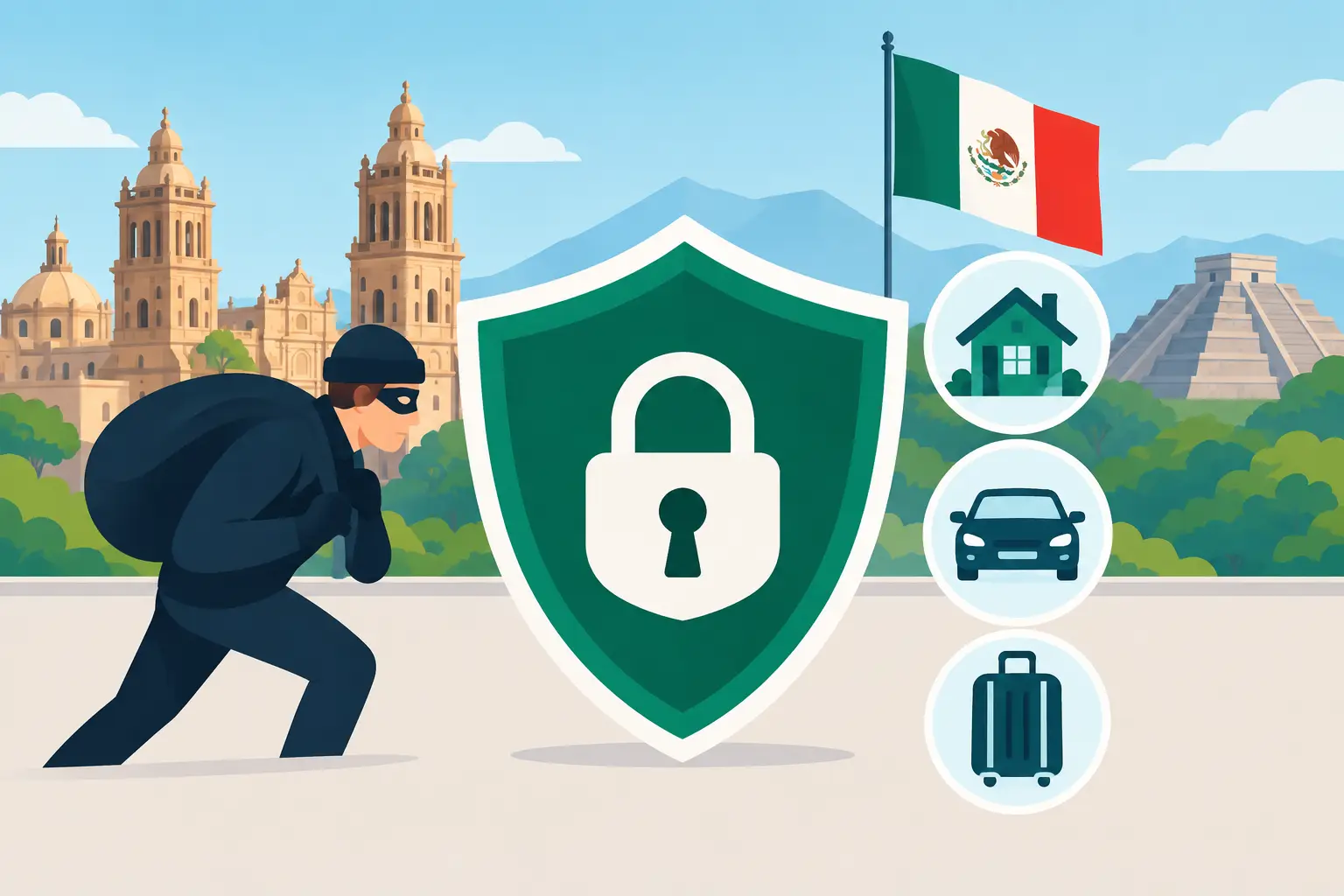
A vehicle theft claim in Mexico is not a situation where you want to discover that you bought liability-only coverage. When travelers ask, “Which Mexico policies cover theft?” the answer depends on what was stolen, the policy type you purchased, and the specific physical damage options shown on your declarations.
For most US drivers crossing the border, the key distinction is simple: Mexican liability insurance pays for damage or injuries you cause to others. It generally does not pay if someone steals your vehicle. Theft protection is usually connected to a physical damage package, often called comprehensive and collision coverage, rather than a stand-alone liability policy.
Which Mexico Policies Cover Theft?
Mexican auto policies with physical damage coverage are the most common source of theft protection for US travelers. Depending on the policy terms, this can include total theft of the covered vehicle and, in some cases, partial theft of covered vehicle equipment. A liability-only policy is designed to meet Mexico’s legal financial-responsibility requirements. It is valuable protection, but it is not protection for your own vehicle’s theft or damage.
The same principle applies beyond cars and trucks. Theft coverage may be available through Mexican home insurance, boat insurance, and certain policies for Mexican-registered vehicles, but coverage is never automatic simply because a policy exists. The insured property, location, deductible, exclusions, and limit all matter.
Mexican tourist auto insurance with physical damage
For a US-plated automobile, SUV, pickup, RV, motorhome, motorcycle, or street-legal ATV, physical damage coverage is the portion to examine first. It may respond when your covered vehicle is stolen, subject to the policy’s theft provisions and deductible.
This is particularly relevant for travelers who leave a vehicle at a hotel, airport, marina, trailhead, repair shop, or long-term residence. A higher-value vehicle can create a substantial financial loss even when a trip is short. Travelers who finance or lease a vehicle should also confirm that their Mexican coverage meets the requirements of the lender or leasing company before departure.
A common mistake is assuming that an existing US or Canadian auto policy will provide the same theft protection south of the border. In many cases, it will not satisfy Mexico’s legal insurance requirements or provide the local claims and legal protection a Mexico policy is built to provide. A Mexican policy should be selected for the trip, not treated as an afterthought at the border.
Annual policies for frequent border crossers
An annual Mexican auto policy can make sense for snowbirds, Baja homeowners, retirees, business travelers, and drivers who cross often. From a theft-protection standpoint, the issue is not the term length. The issue is whether the annual policy includes physical damage coverage and whether its insured value accurately reflects the vehicle.
Choosing an insured value that is too low may reduce the premium, but it can leave you with an unpleasant gap after a total theft. Choosing a value that is not supported by the vehicle’s actual value can create its own claim questions. Use a realistic value and review it again before renewing, especially after upgrades, market changes, or the purchase of an RV conversion or specialty vehicle.
Mexican-registered vehicle insurance
If you own a vehicle registered in Mexico, it requires a different policy than a tourist auto policy for a US-plated vehicle. Theft coverage can be available, but the vehicle must be insured under the correct Mexican-registered vehicle program.
This distinction matters to expats and cross-border households that keep vehicles in Mexico year-round. Do not assume a policy written for occasional tourist travel will protect a car that has been permanently imported or registered in Mexico. Registration status, garaging location, and intended use should all be disclosed accurately when you request a quote.
What Does Vehicle Theft Coverage Usually Include?
The exact answer belongs in the policy wording, but theft protection commonly focuses on the covered vehicle itself. A total theft claim generally means the vehicle was taken and not recovered within the period defined by the policy. If it is recovered with damage, the claim may involve the theft and physical damage provisions, depending on the circumstances and policy language.
Partial theft is more complicated. Stolen factory-installed equipment may be handled differently from removable accessories, custom parts, camping gear, tools, electronics, or personal property. For example, a stolen built-in radio, a removable GPS unit, and luggage taken from an SUV are not necessarily treated the same way.
Before purchasing, ask how the policy handles these practical questions:
- Is total theft included with the physical damage option you selected?
- Does the policy address partial theft or stolen vehicle equipment?
- What deductible applies to a theft claim?
- Are custom accessories, modifications, or permanently attached equipment included in the insured value?
- Are personal belongings inside the vehicle excluded or subject to a separate limit?
For motorhome owners, this review is especially worthwhile. The vehicle itself, permanently installed fixtures, personal possessions, tow equipment, and recreational gear may fall into different coverage categories. The policy should match how the RV is actually equipped and used.
Theft Coverage Does Not Always Include Your Belongings
A policy that covers theft of the vehicle may not pay for everything inside it. Clothing, cameras, laptops, luggage, jewelry, bicycles, tools, and similar personal items are often subject to exclusions, limited coverage, or a separate personal-property policy.
That is not a technicality. It is one of the most frequent misunderstandings after a break-in. A traveler may have excellent physical damage coverage for a truck but discover that expensive items stored in the cab or bed are not insured under the auto policy.
If you routinely travel with valuable gear, consider the coverage before the trip. You may need to rely on a homeowners, renters, inland marine, or specialty policy for certain belongings, and those policies may have territorial limitations. Confirm how they apply in Mexico rather than assuming they travel with you.
Home and Boat Policies May Cover Theft Differently
Mexican home insurance can provide theft protection for the residence, contents, or both, depending on the selected package. A vacation home in Baja, Puerto Vallarta, San Miguel de Allende, or another Mexican destination needs coverage designed for its occupancy pattern. A home used only occasionally may have different risk considerations than a primary residence occupied year-round.
Pay close attention to whether coverage applies to the building, household contents, detached structures, and property kept outside the home. Security requirements, vacancy periods, forced-entry requirements, and documentation of valuables can affect a theft claim.
Boat insurance may also include theft coverage for the insured vessel, but trailers, tenders, fishing equipment, electronics, and personal effects can have their own limits or conditions. A boat stored in Mexico during the off-season should be insured for its actual storage arrangement, not just for use on the water.
What Will Not Usually Be Theft Coverage?
Mexican liability insurance, driver’s-license liability coverage, medical evacuation plans, travel medical insurance, accidental death coverage, and life insurance serve important purposes, but they are not designed to replace a stolen vehicle or stolen household property.
Kidnap and ransom coverage is also different from property theft insurance. It is specialized protection for a serious personal-security risk and should not be confused with comprehensive auto coverage. Each policy solves a distinct problem, which is why building the right protection package matters.
Steps to Take If Your Vehicle Is Stolen in Mexico
A theft loss requires quick action. First, report the theft to local authorities and obtain the official report or case number. Then contact your Mexican insurer or claims assistance number as soon as possible. Delays can complicate the investigation and claim process.
Keep your policy information, vehicle identification number, registration, proof of ownership, lender details if applicable, and a current list of major accessories in a secure place separate from the vehicle. Store digital copies as well. If the vehicle is stolen with your documents inside, those records can save critical time.
Do not sign documents you do not understand. Theft claims in Mexico can involve police reports, title documentation, lender interests, and recovery procedures. A policy with meaningful legal-defense and claims support can be just as valuable as the physical damage limit when a stressful event occurs far from home.
Choose Theft Protection Before You Cross
The right question is not only whether a Mexico policy covers theft. It is whether the policy covers the specific vehicle or property you depend on, at a value you can live with, under the way you actually travel. Lewis and Lewis can help travelers compare Mexican coverage options before they cross, so the policy details are clear when they matter most.
Before your next Mexico trip, review your liability limit, physical damage selection, theft deductible, insured value, accessories, and personal-property exposure. A few minutes spent checking those details can make the difference between a difficult interruption and a manageable claim.