

A crash south of the border can turn a familiar insurance task into a high-pressure legal situation. Mexico collision reporting is not just about exchanging insurance cards and taking a few photos. The steps you take at the scene can affect police findings, your ability to leave the area, and how smoothly your Mexican auto insurance claim moves forward.
The best time to understand the process is before you need it. Keep your Mexican insurance policy, claims phone number, vehicle registration, driver’s license, and travel documents accessible in your vehicle. If an accident happens, stay calm, protect the scene, and let the proper authorities and insurance adjuster do their jobs.
Mexico Collision Reporting Starts at the Scene
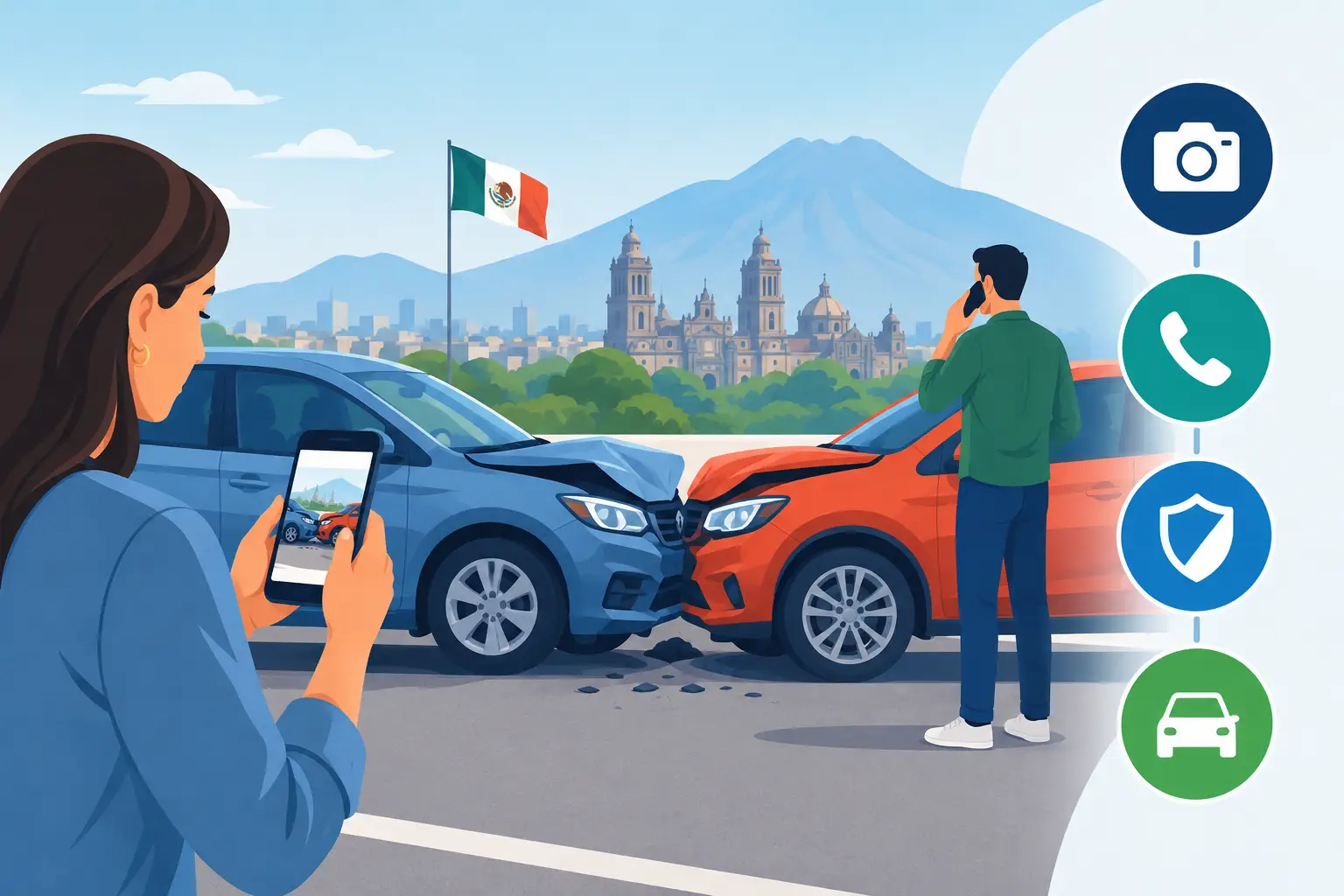
First, check for injuries. Call 911 in Mexico for emergency police, fire, or medical response when there are injuries, a dangerous roadway situation, or an immediate threat. If it is safe to do so, move yourself and passengers out of traffic. Turn on hazard lights, set out warning devices if you have them, and do not put yourself at risk to inspect vehicle damage.
Do not leave the scene of an accident. This is especially important when another person is injured, another vehicle is involved, public property is damaged, or there is disagreement about what occurred. Leaving before authorities arrive can create serious complications under Mexican law and can make it harder to establish the facts of the loss.
Next, call the claims number shown on your Mexican insurance policy. Mexican policies generally require prompt notice of a loss, and the insurer will send or arrange for an adjuster when one is available. The adjuster is a key part of the local claims process. They can review the accident, communicate with police and other parties, explain next steps, and help determine whether towing, repairs, or additional reporting is needed.
If you purchased your policy through Lewis and Lewis, use the claims information provided with your policy rather than relying on a general internet search at the roadside. Save the insurer’s emergency claims number in your phone before departure and keep a printed copy in the glove box. Cell coverage can be limited in remote Baja, mountain, and rural areas.
What to Document While You Wait
Photos and notes can preserve details that become difficult to recall later. Take pictures of all vehicles, license plates, damage, the road surface, traffic signs, skid marks, weather conditions, and the overall scene. Photograph the other driver’s insurance documents and driver’s license only if they are willing to provide them. Avoid escalating a tense conversation to get information.
Write down the time, exact location, direction of travel, and a short factual account of what happened. Note the names and contact information of witnesses when possible. If there are nearby businesses, toll booths, or security cameras, tell the adjuster or police officer. Video footage may be overwritten quickly.
Keep your description factual. State what you saw and did, but do not guess about speed, distances, injuries, or fault. A simple statement such as, “I was traveling north in my lane when the other vehicle entered my path,” is more useful than an emotional explanation made under stress.
Police Reports, Adjusters, and Legal Protection
A police report may be required or strongly advisable depending on the location, severity of the accident, injuries, and property damage. In some cases, authorities may direct drivers to a local police station or involve the Ministerio Público, Mexico’s public prosecutor’s office. That can sound alarming, but it is part of the legal process when a collision involves potential injury, significant damage, or disputed responsibility.
Your Mexican insurance adjuster can be particularly valuable here. Unlike a standard accident exchange in the United States, the adjuster may help coordinate with officials and explain the documents being prepared. Ask for the report number, officer’s name, agency, and copies of any paperwork you are asked to sign.
Do not sign a statement, settlement, repair authorization, or release that you do not understand. If paperwork is in Spanish, ask the adjuster to explain it. Do not promise to pay cash, accept cash, or agree that you are at fault simply to make the situation end faster. A quick roadside agreement can leave you without a clear record of what was settled or whether further claims may follow.
Legal-defense coverage matters for this reason. Mexico recognizes valid Mexican liability insurance, while a U.S. or Canadian auto policy generally does not satisfy Mexican legal requirements. A quality Mexican tourist auto policy can provide liability protection and legal-defense assistance subject to its terms, conditions, and limits. Before your trip, compare more than the price. Confirm the liability limit, legal-defense amount, deductible, roadside assistance provisions, and claims support available under the policy.
The Information Your Insurer Will Need
Once you report the collision, be ready to provide your policy number, contact information, location, vehicle description, and a concise description of the event. The insurer may also request photos, police information, witness details, and documents showing vehicle ownership or registration.
Accuracy matters more than speed when you provide a written statement. Use the same basic facts you gave at the scene. If you discover new information later, tell the adjuster rather than changing your account informally with the other driver.
Keep a record of every conversation connected to the claim. Note the date, time, name of the person you spoke with, and what they told you. Save receipts for towing, storage, transportation, emergency lodging, and other expenses, but do not assume every cost is covered. Coverage depends on the policy you selected and the circumstances of the loss.
Towing, Repairs, and Getting Home
Do not authorize a tow from an unknown operator until police or your insurer’s representative confirms the arrangement, unless immediate safety requires it. Ask where the vehicle is being taken, who will have custody of it, and how you can retrieve personal belongings. Take photos of the vehicle before it leaves, including its interior and odometer.
Repair options depend on the policy, the vehicle’s condition, where the accident occurred, and whether it can be safely driven. Some travelers prefer repairs in Mexico for speed and convenience. Others may have coverage that allows repairs in the United States, which can be especially useful for specialized vehicles, RVs, motorcycles, or vehicles with a preferred repair facility at home.
Do not start repairs or discard damaged parts before the insurer has had a reasonable opportunity to inspect the vehicle, unless the adjuster authorizes the work. Unauthorized repairs can complicate an otherwise valid claim.
Common Reporting Mistakes to Avoid
The most damaging mistake is waiting too long to call the Mexican insurer. Another is treating the incident as though a U.S. insurance company will handle it at the scene. For travel in Mexico, the Mexican policy and its claims instructions are your primary resource.
Drivers also run into trouble by moving vehicles before documenting the scene, arguing over fault, or accepting an unofficial offer to “take care of it” for cash. There are situations where a minor, no-injury incident may be resolved simply, but that decision should be made carefully and with clear documentation. When in doubt, report the collision and ask the insurer for direction.
Finally, do not assume that a low-speed impact means there is no claim to report. Hidden damage, later injury allegations, and disagreement about events can emerge after both drivers leave. Prompt reporting protects your position even when the visible damage seems minor.
Prepare Before You Cross the Border
Put a collision kit in your vehicle: printed insurance documents, a pen, a phone charger, reflective warning triangles, basic first-aid supplies, and the claims number saved in more than one place. Review your policy before departure, including its territorial limits, deductibles, liability limits, legal-defense benefits, and instructions for reporting an accident.
For frequent Mexico drivers, an annual Mexican auto policy can make preparation easier because the policy is already in force for covered trips throughout the year. For a weekend crossing, one-day and short-term coverage can still provide the legally valid protection and claims guidance you need. The right choice depends on how often you travel, what you drive, and the value of the protection you want behind you.
A collision is never part of the plan, but a clear report, early call to your insurer, and steady attention to the facts can protect your trip from becoming a larger problem. Before the next crossing, make sure your Mexican policy and claims number are as easy to reach as your passport.