


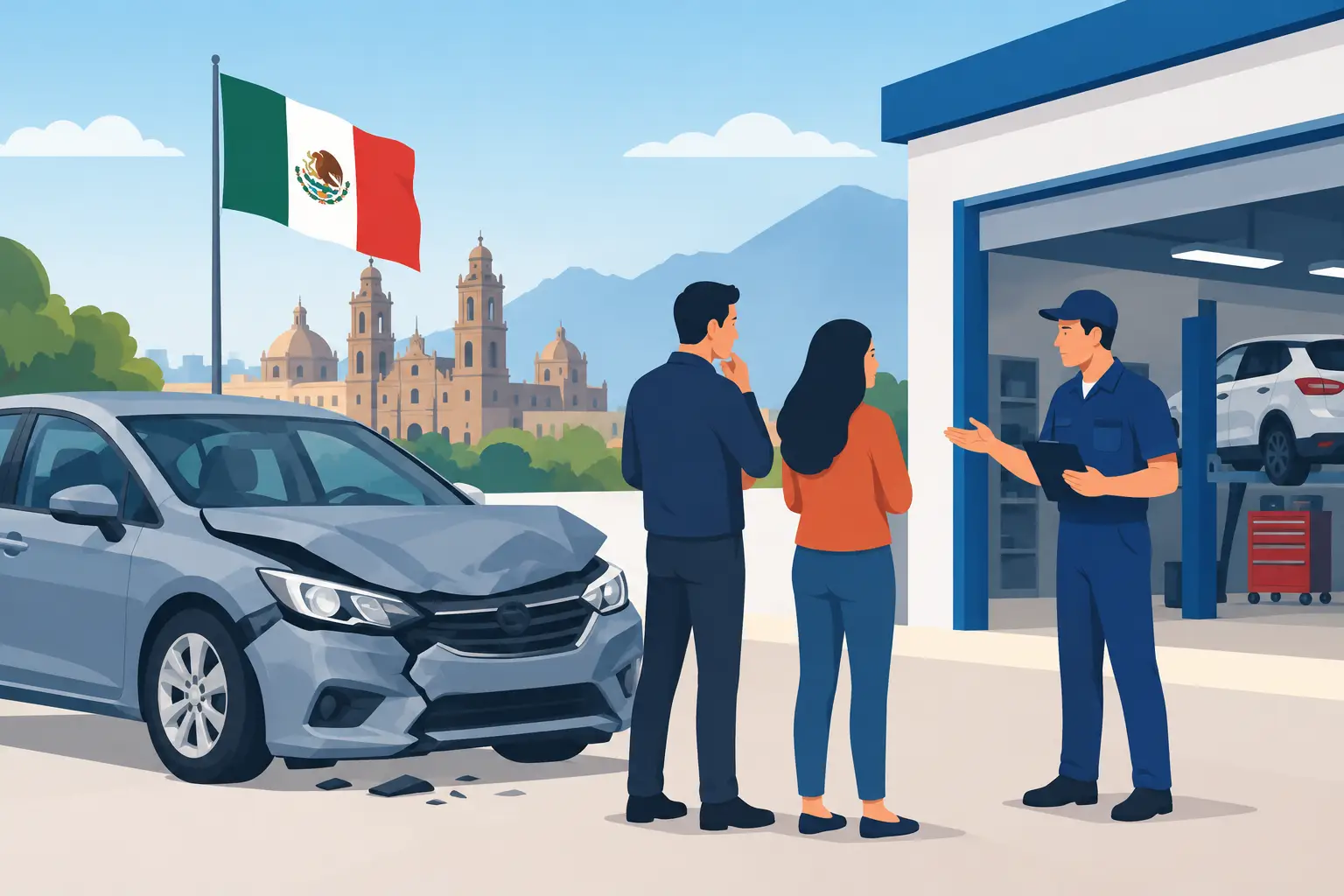
A collision south of the border can turn a simple travel day into a hard decision: leave your vehicle for repair in Mexico, arrange to bring it home, or use a U.S. repair facility if your policy allows it. Your Mexico repair choices affect how quickly you get back on the road, how claims are handled, and what out-of-pocket costs you may face.
The right answer is not always the closest body shop. A minor bumper repair in a major Mexican city may be resolved efficiently through an approved local facility. Significant damage to a newer U.S.-registered vehicle, an RV, or a specialty vehicle may make U.S. repairs more practical. The key is to understand the policy before the accident, then follow the insurer’s claims process before authorizing work.
Start With the Claims Process, Not the Repair Shop
After an accident in Mexico, protect people first and contact the appropriate authorities when necessary. Then report the claim to your Mexican insurance carrier as soon as possible. In many cases, an adjuster must inspect the vehicle, document the loss, and help determine liability before repairs can move forward.
Do not assume that a U.S. estimate, a repair shop recommendation, or a verbal promise at the scene settles the claim. Mexican insurance is governed by the policy issued in Mexico and the claims procedures that apply there. The adjuster’s report, the covered damage, your deductible, and the repair option available under your policy all matter.
Take clear photos of the vehicles, road conditions, license plates, damage, and any documents provided at the scene. Keep the claim number, adjuster’s name, police report information, towing receipts, and repair estimates together. This documentation can make a meaningful difference if you later need to coordinate repairs across the border.
Understanding Your Mexico Repair Choices
Most drivers will consider one of two paths: repairs in Mexico or repairs in the United States. Neither is automatically better. The practical choice depends on where the accident occurred, how serious the damage is, whether the vehicle is safe to move, the availability of parts, and the provisions of the policy.
Repairing Your Vehicle in Mexico
Local repair can be the sensible choice when the damage is manageable, parts are available, and you are near an established repair facility. It may also avoid the expense and delay of transporting a disabled vehicle back to the United States.
Mexico has capable repair shops, particularly in larger cities and well-traveled destinations. Still, shop capacity, parts availability, paint matching, repair timelines, and familiarity with a particular make or model can vary. This is especially relevant for luxury vehicles, late-model trucks, modified overland rigs, motorhomes, and vehicles with advanced driver-assistance systems.
Before approving repairs, ask whether the shop is approved by the insurer, what parts will be used, how long the work is expected to take, and whether any portion of the estimate is your responsibility. If a shop says it can begin immediately, that does not replace insurer approval. Unauthorized work can complicate reimbursement or payment.
Repairing Your Vehicle in the United States
For many U.S. drivers, U.S. repair access is a valuable feature of Mexican auto insurance. It can be particularly helpful if you want your established body shop to inspect the vehicle, prefer a shop familiar with your model, or need repairs near home after an accident close to the border.
However, U.S. repair options should be read carefully. Some policies may limit labor reimbursement, restrict where repairs can be completed, require prior approval, or set conditions for transporting the vehicle. A policy that permits U.S. repairs without an hourly labor-rate limit can provide more flexibility when local labor rates are substantially higher than those used in a foreign repair estimate.
Lewis and Lewis offers Mexican tourist auto insurance underwritten by Qualitas with U.S. repair options and no hourly labor-rate limit. That feature is worth considering before a trip, not after a loss, especially for drivers whose vehicle value or repair complexity makes shop choice important.
When Towing or Transport Becomes the Main Issue
A damaged vehicle may not be safe or legal to drive. In that case, the repair location may be secondary to getting the vehicle secured and moved properly. Towing coverage, roadside assistance provisions, mechanical condition, Mexican authorities, and border requirements can all affect the next step.
Do not try to drive a vehicle across the border simply because repairs may be easier in the United States. Fluid leaks, damaged lights, deployed airbags, steering problems, or loose body panels can create a safety issue and may cause problems at the border. Ask the claims representative whether towing, storage, or transport is covered and what authorization is required.
What Determines Which Option Makes Financial Sense?
The repair decision is not just about convenience. Your deductible is often the first number to review. If the repair cost is only slightly above the deductible, filing a physical damage claim may not produce much financial benefit. On the other hand, a major collision can involve towing, storage, labor, parts, and related damage that quickly exceed a deductible.
Vehicle value also matters. An older vehicle with extensive damage may be treated differently from a newer vehicle with repairable panel damage. If a vehicle is determined to be a total loss, the policy’s valuation terms, insured value, and documentation become more important than the choice of repair shop.
For RV owners and motorhome travelers, repair decisions can be more complicated. A shop may be able to repair the chassis but not the living quarters, or vice versa. Specialty parts, roof damage, slide-outs, custom interiors, towing equipment, and solar installations can require expertise that is not available nearby. The same applies to motorcycles, street-legal ATVs, trailers, and bus conversions.
Questions to Ask Before You Buy Mexican Auto Insurance
The best time to compare repair provisions is while you are getting a quote. Basic liability coverage may satisfy Mexican legal requirements, but it does not pay to repair your own vehicle after a covered collision. Drivers who want physical damage protection should look beyond the price and ask direct questions about how a claim would work.
Ask whether U.S. repairs are permitted, whether there is an hourly labor limitation, and whether you can choose the repair facility. Confirm the physical damage deductible and whether it is based on a percentage of the insured value. Find out what towing, roadside assistance, legal defense, and medical benefits are included.
You should also verify that the vehicle is insured for an accurate value. Understating its value to reduce premium can create a serious problem after a total loss. For vehicles with aftermarket equipment or expensive accessories, ask how those items are handled and whether they need to be declared separately.
Annual travelers should compare the convenience of annual coverage with repeated short-term policies. Frequent Baja visitors, snowbirds, cross-border commuters, and RV travelers may value the ability to manage policy details online and have a consistent claims contact available whenever they travel.
Avoid These Costly Repair Mistakes
A few decisions can make an otherwise straightforward claim more difficult. Do not leave the accident scene without following the directions of local authorities or the adjuster. Do not sign documents you do not understand. Do not accept cash settlement pressure from another driver without first reporting the accident, particularly if there may be injuries or hidden vehicle damage.
Avoid moving forward with repairs before the insurer has had the required opportunity to inspect the vehicle. Also, do not discard damaged parts, invoices, or photos. If you return to the United States before repairs are complete, maintain a written record of what the insurer approved and who is responsible for payment.
If the accident involves another party, legal-defense coverage can be as important as vehicle repair coverage. Mexico treats auto accidents seriously, and a locally valid Mexican policy with meaningful liability and legal-defense limits helps protect more than your vehicle.
Choose Coverage for the Repair Decision You May Have to Make
No one plans a Mexico trip around a body shop estimate. But travelers who understand their repair options before crossing the border are better positioned to make calm, practical decisions after an accident. Review the physical damage coverage, deductible, towing provisions, and U.S. repair terms while the vehicle is still in your driveway. That preparation gives you more control when the unexpected happens miles from home.