

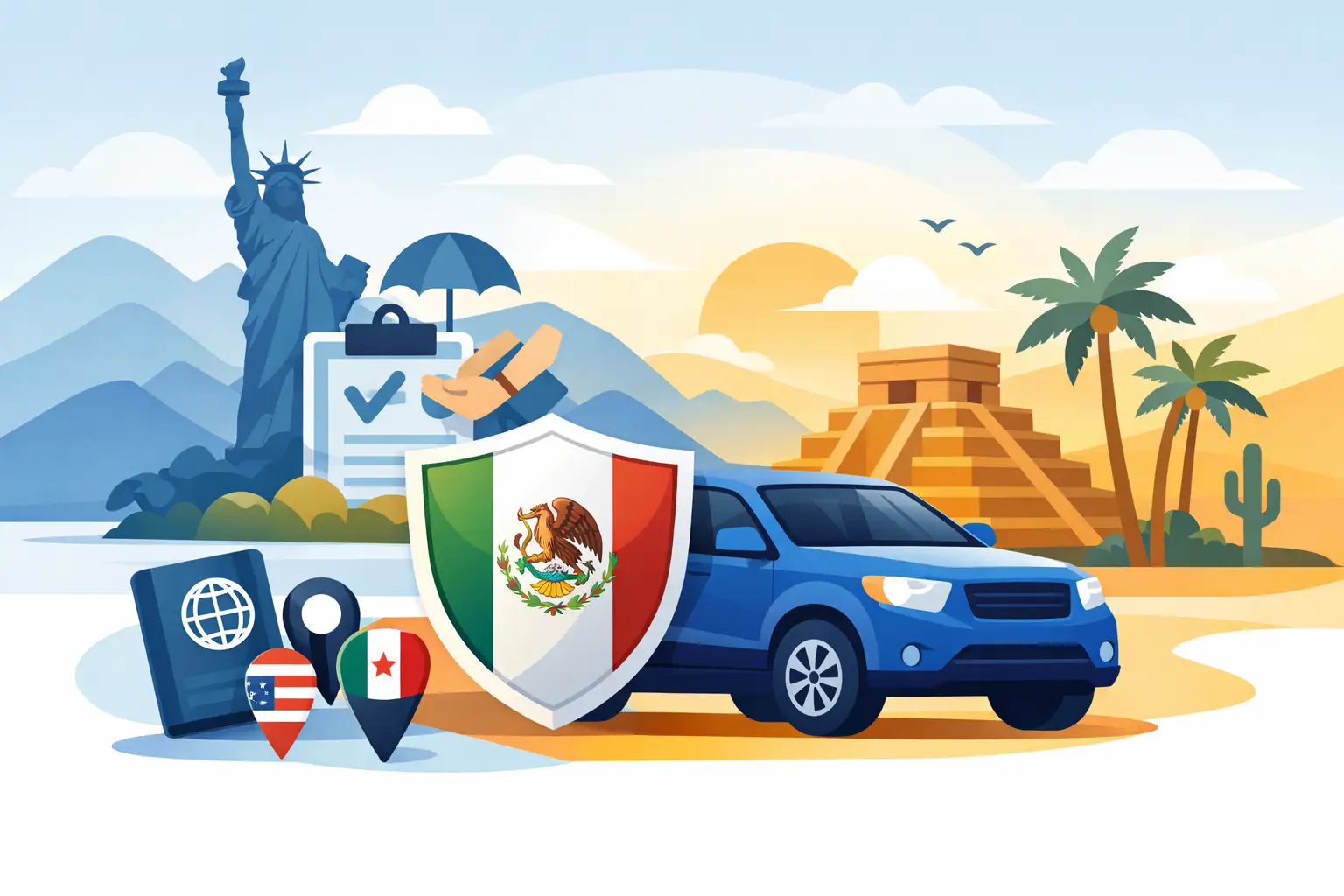
A few miles south of the border, the rules that protect you change. Your U.S. auto policy may offer limited Mexico coverage, or none at all, and it generally does not meet Mexico’s requirement for liability coverage issued by an authorized Mexican insurer. That is why Mexican insurance should be arranged before your trip, not after an accident, traffic stop, or breakdown puts your plans on hold.
For families headed to Rocky Point, RV owners traveling Baja, riders touring the mainland, and frequent border crossers, the right policy does more than satisfy a legal requirement. It provides a practical plan for handling an unfamiliar claim environment, including liability allegations, legal procedures, vehicle damage, and the logistics of getting home.
Why Mexican Insurance Is Required for Drivers
Mexico requires drivers to carry liability insurance from a Mexican insurer. If you cause an accident, that coverage responds to injury and property damage claims for others, subject to the policy limits and terms. A policy purchased from a U.S. agency can be valid when it is underwritten by an authorized Mexican insurance company, but a standard U.S. auto policy alone is not a substitute for Mexican liability coverage.
The consequences of inadequate coverage can be serious. After an accident involving injuries or significant damage, authorities may require proof of valid insurance and may hold a driver while responsibility is investigated. Legal representation, bail-related expenses where covered, and communication with local authorities can become as important as repairing the vehicle.
This is why the cheapest liability policy is not automatically the best value. It may meet the minimum requirement, but it can leave little room when an accident involves multiple vehicles, medical care, or substantial property damage. Travelers should look beyond the entry price and consider the liability limit, legal-defense allowance, claims process, and the coverage they need for their own vehicle.
What a Strong Mexican Auto Insurance Policy Can Include
Mexican auto insurance is not one-size-fits-all. A weekend trip in a paid-off sedan presents different concerns than a months-long RV journey, a motorcycle tour, or an overland trip with expensive gear. Start with the protections that address your real financial exposure.
Liability and legal defense
Liability coverage is the foundation. It pays covered third-party injury and property damage claims when you are legally responsible for an accident. Higher limits can matter greatly when injuries are involved. Policies available through Lewis and Lewis can offer up to $500,000 in combined single-limit liability coverage, providing substantially more protection than a bare-minimum approach.
Legal-defense coverage is a separate feature worth examining closely. An accident investigation in Mexico can involve local legal processes that are unfamiliar to U.S. drivers. Coverage for attorney fees and related legal assistance can help protect your interests when you need it most. Some policies provide up to $100,000 for legal defense, but travelers should always review the declarations page and policy wording for the applicable limit and conditions.
Physical damage, theft, and deductible choices
Liability protects others. Physical damage coverage protects your own vehicle after a covered collision, rollover, theft, vandalism, fire, or certain weather-related losses, depending on the policy. It is especially valuable for newer vehicles, motorhomes, trucks, and vehicles with a loan or lease.
The trade-off is the deductible. A lower deductible generally costs more upfront but reduces your out-of-pocket share after a covered loss. A higher deductible may make sense for a lower-value vehicle or a short trip where you are comfortable retaining more risk. Be accurate when entering the insured value. Overstating a vehicle’s value can increase the premium without creating extra recovery, while understating it can leave you short after a major loss.
Medical, roadside, and travel-related protection
Medical payments can help with covered injuries to occupants after an accident. Roadside assistance may also be useful when a flat tire, mechanical problem, or towing need interrupts a trip far from home. These benefits vary by plan, location, and circumstance, so they should support – not replace – your regular health coverage, emergency planning, and vehicle maintenance.
For many travelers, medical evacuation deserves separate consideration. A serious illness or injury can create a difficult decision about where to receive ongoing care. International medical and evacuation coverage may help arrange transportation to the U.S. or Canada when medically necessary, subject to the plan’s requirements.
Match Coverage to the Vehicle and the Trip
Before requesting a quote, gather the details that determine both eligibility and premium: vehicle year, make, model, estimated value, travel dates, destination, and whether you are towing anything. Mexican insurance can be written for automobiles, SUVs, pickups, motorhomes, bus conversions, motorcycles, street-legal ATVs, and certain trailers, but coverage rules can differ by vehicle type.
An RV owner should pay close attention to the motorhome value, attached equipment, towing arrangements, and the time spent outside the U.S. A motorcycle rider may prioritize medical benefits and roadside help, while a family in a daily-driver SUV may focus on liability, physical damage, and the ability to repair the vehicle at home.
If you make repeated trips, compare the cost of several short-term policies with an annual policy. One-day through annual terms give travelers flexibility, but the better option depends on the number of crossings, length of each stay, and how often the vehicle will be in Mexico. Annual coverage can be convenient for frequent visitors, snowbirds, and cross-border households. For a single vacation, a short-term policy may be the more economical choice.
Consider Where Repairs Will Happen
A claim is not only about whether damage is covered. It is also about how and where repairs will be completed. Travelers who depend on their vehicle for work, school, or family responsibilities may prefer the option to repair in the U.S. rather than remain in Mexico while work is performed.
Ask whether the policy permits repairs in the U.S. or Canada and how labor rates are handled. Policies offered by Lewis and Lewis include U.S. repair options without an hourly labor-rate limit, an important feature when local shop rates at home differ from rates in Mexico. As with any claim benefit, the repair process remains subject to policy terms, adjuster review, and the facts of the loss.
Take clear photographs of your vehicle before departure, keep maintenance records available, and store policy documents where you can access them without relying on cell service. A printed copy in the glove box or RV, along with a digital copy on your phone, is a sensible backup.
What To Do If an Accident Happens in Mexico
Your first responsibility is safety. Move out of traffic only when it is safe and permitted, check for injuries, and call emergency services when anyone needs medical help. Do not admit fault or agree to private arrangements at the scene before speaking with the insurer’s claims assistance line.
Report the claim promptly and follow the instructions you receive. Take photos of vehicle positions, damage, license plates, the road conditions, and any relevant signs. Exchange identifying information with the other driver and obtain police documentation when authorities respond. Keep receipts for approved expenses and avoid authorizing major repairs until the claims process tells you how to proceed.
Patience matters here. Cross-border claims can involve language differences, local procedures, inspections, and coordination between adjusters, repair facilities, and U.S. service providers. Good documentation and timely reporting make that process easier.
Buy Coverage Before You Cross
Waiting until the last fuel stop near the border can lead to rushed decisions and incorrect vehicle details. Getting a quote ahead of time gives you time to compare limits, deductibles, trip dates, and optional protections without pressure. It also lets you confirm that your policy starts when you need it to start.
Read the policy documents before leaving, not from a hotel parking lot after a loss. Confirm the named insured, covered vehicle, effective dates, destination restrictions if any, and claim-reporting instructions. If you are towing, driving a specialty vehicle, or taking a long-term trip, ask questions before purchase rather than assuming a standard auto policy covers every situation.
The border is the right place to start a trip, not to start figuring out your protection. Set up Mexican insurance while you are still at home, keep the documents within reach, and head south with a policy built for the road ahead.