


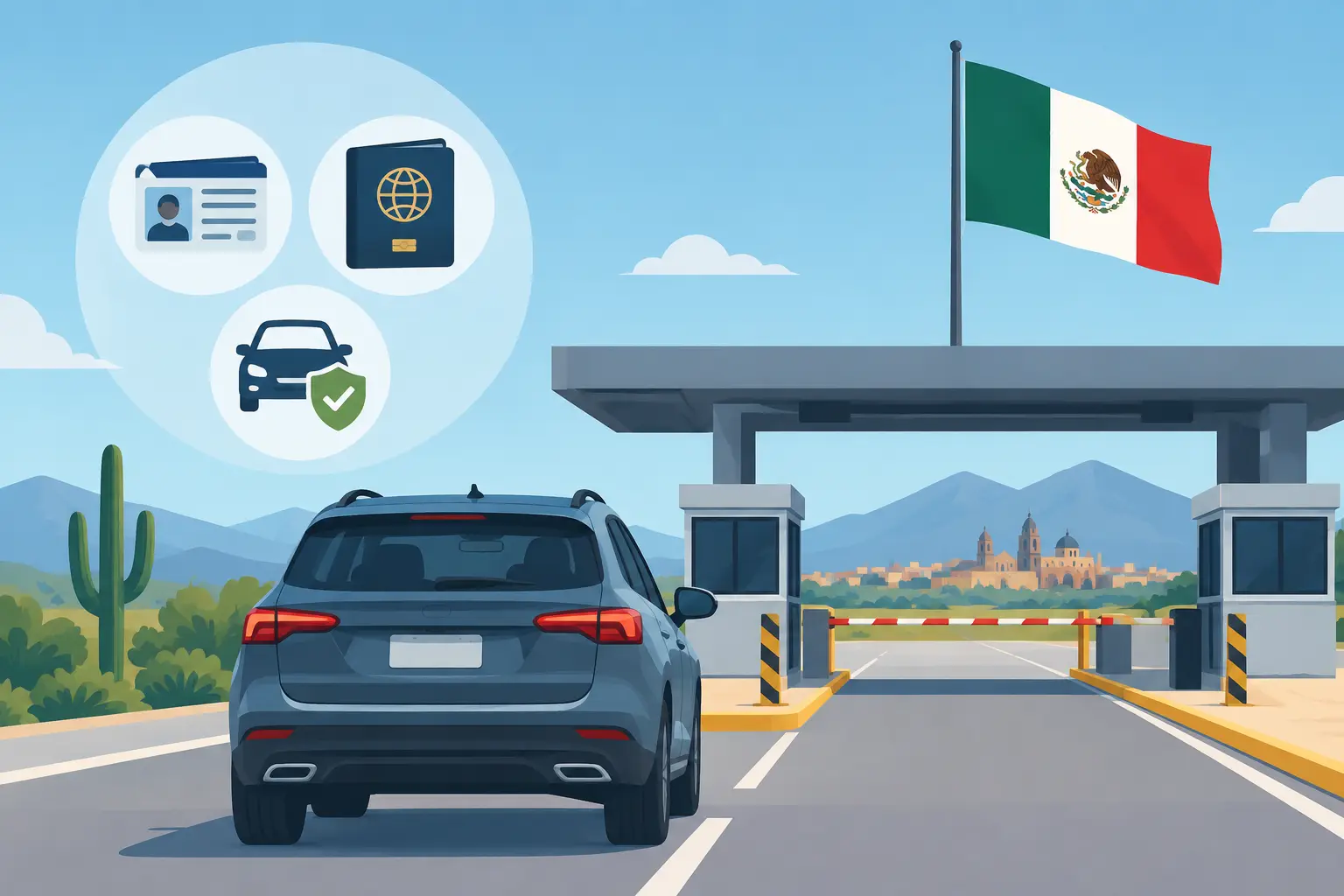
The border crossing may take only a few minutes, but the insurance decision should happen well before you reach it. Mexico policies for drivers are not simply an extension of a US auto policy. If an accident occurs in Mexico, you need coverage issued by a Mexican insurer that can respond under Mexican law, handle local claims procedures, and provide the legal support that a serious accident may require.
For a quick day trip to a Baja beach, an extended RV journey, or regular travel between a US home and property in Mexico, the right policy starts with understanding what you are buying. Price matters, but the least expensive liability limit can become a costly choice when damages, injuries, or legal expenses exceed it.
Mexico Policies Must Meet Mexican Requirements
Mexican liability insurance is required to drive legally in Mexico. A US or Canadian auto policy may offer limited coverage in certain areas near the border, but it generally does not meet the requirement for a Mexican-issued policy or provide the same claims and legal-defense support. Do not assume the coverage on your vehicle follows you across the border.
A Mexican tourist auto policy is designed for vehicles that are registered outside Mexico and temporarily driven there. It can cover cars, SUVs, pickups, trailers, motorhomes, motorcycles, and other eligible vehicles. The policy should be in force before you enter Mexico, with the correct vehicle information, travel dates, and coverage selections shown on the documents you carry.
The legal requirement is only the starting point. Required liability coverage may not be enough to protect your savings after a major collision. A policy with meaningful liability limits and legal defense coverage gives you more room to handle a difficult situation without relying on personal funds.
Start With the Way You Travel
The best Mexican insurance policy depends on what you drive, where you are going, and how long you will be in the country. A family driving a sedan to Puerto Peñasco has different needs than an RVer traveling the length of Baja, a rider on a motorcycle tour, or a snowbird leaving a vehicle in Mexico for part of the year.
Short-term policies can make sense for a single trip, with terms commonly available from one day through several months. Annual coverage is often the better value for frequent travelers, people who make repeated border crossings, or owners who spend extended time in Mexico. It also removes the risk of discovering that a previous policy expired the night before an unplanned trip.
Your vehicle type matters. A motorhome, bus conversion, motorcycle, street-legal ATV, or truck towing a trailer should be insured as the vehicle it actually is. Trying to fit a specialized vehicle into a standard auto quote can create confusion when it is time to file a claim. List any towed vehicle, accessory, or special use accurately, and ask about eligibility before purchasing.
Choose Liability Limits for the Risk, Not the Minimum
Liability coverage pays for bodily injury and property damage you cause to others. This is the foundation of Mexican auto insurance, and it deserves more attention than the premium alone. A severe injury claim, damage to multiple vehicles, or an accident involving a commercial vehicle can move far beyond a basic liability limit.
For many US drivers, a combined single limit of $500,000 provides a more practical level of protection than minimum limits. Combined single-limit coverage applies one overall limit to covered bodily injury and property damage liability claims, rather than splitting protection into smaller categories. Whether that amount is appropriate depends on your assets, driving habits, destination, and comfort with risk, but it is a useful benchmark for travelers who want meaningful protection.
Legal defense is equally important. After a serious accident, local authorities may require statements, documentation, or other legal assistance before the matter is resolved. Coverage that includes a substantial legal-defense limit, such as $100,000, can help provide access to the professional support needed to navigate the process. This is not an optional detail to skim past in the policy wording.
Consider Physical Damage and Theft Coverage
Liability protects other people. Physical damage coverage protects your covered vehicle after a collision, rollover, fire, vandalism, or other covered loss. Theft coverage addresses a separate risk. If you finance your vehicle, your lender may require these protections, but they are also worth considering whenever replacing or repairing the vehicle would be a financial hardship.
The insured value should be realistic. Overstating a vehicle’s value does not guarantee a larger claim payment, and understating it can leave you short after a total loss. Be prepared to provide the year, make, model, vehicle identification number, and total insured value. Modifications, expensive equipment, custom conversions, and permanently attached accessories may need special attention.
Deductibles are the trade-off. A higher deductible can reduce the premium, but it increases what you must pay after a covered loss. For an older vehicle with modest value, liability-only protection may be a reasonable choice. For a newer truck, motorhome, or vehicle that is difficult to replace, physical damage and theft coverage often provide greater peace of mind.
Read the Claim and Repair Provisions
A good policy is not just about what happens at the scene. It should also address what happens after the claim is reported. For US-based travelers, the ability to repair a covered vehicle in the United States can be a major advantage, especially after an accident far from home.
Ask whether US repairs are available and whether there is an hourly labor-rate cap. A low labor allowance can leave a policyholder paying the difference when repair costs are higher in their local market. Also confirm the steps for reporting a claim, what documents to keep, and whether you should wait for a claims representative or local authority before moving the vehicle.
If an accident happens, protect everyone first and seek emergency help when needed. Then contact the insurer’s claims number promptly, take photos when it is safe, exchange information, and keep copies of reports and receipts. Do not agree to private cash arrangements or sign documents you do not understand simply because you want to get back on the road quickly.
Details That Can Affect Your Coverage
Small errors can create large problems. The named insured should match the person with an insurable interest in the vehicle. Drivers should hold valid licenses, and the policy dates must cover the full trip. If you are towing, carrying specialized equipment, or using the vehicle for a purpose beyond ordinary personal travel, confirm that the policy allows it.
Travel plans can also change the right coverage choice. Driving only in the border region is different from traveling deep into mainland Mexico. A one-week vacation has a different risk profile than six months of snowbird travel. Drivers who cross frequently may find annual coverage simpler, while occasional visitors may prefer a short-term policy tailored to their exact dates.
Mexican-registered vehicles need a different type of policy than US-registered tourist vehicles. The same is true for homes, boats, international medical coverage, medical evacuation, and other cross-border protections. Keeping these needs separate helps ensure each asset is insured under the policy designed for it.
Get the Policy Documents Before You Leave
Once you have selected coverage, review the declarations page before departure. Confirm the insured vehicle, VIN, policy term, liability limit, physical damage value, deductible, drivers, and claims contact information. Save a digital copy on your phone and carry a printed copy in the vehicle. Cell service and battery power are not guaranteed when you need proof of insurance most.
Lewis and Lewis has specialized in Mexican insurance for more than four decades and offers online quotes for qualifying vehicles and travel periods. The fastest way to receive an accurate quote is to have your vehicle details, total insured value, trip dates, and Mexican destination ready before you begin.
A policy should let you enjoy the road, not leave you wondering what happens if plans change. Take a few extra minutes before crossing to choose limits that fit your real exposure, verify the vehicle details, and keep your documents where you can reach them.